In today’s interconnected world, digital services trade has emerged as a cornerstone of international commerce, providing numerous opportunities for innovation and economic growth. With the rapid advancement of technology and digital connectivity, countries can facilitate cross-border transactions for services such as software development, digital marketing, and online education. While digital services trade restrictions might secure cross-border transactions, excessive restrictions could backfire for digital services trade. Furthermore, the quality of institutions that govern the digital trade might also play a pivotal role in the digital services trade.
Despite the vast potential of the digital services sector (e.g. online banking, education platforms, consulting and digital marketing), challenges remain, including trade restrictions that can significantly hinder the expansion of the digital services trade. Digital trade restrictions, encompassing various national policies related to privacy, data security, and intellectual property rights, often create barriers that limit the free flow of services across borders. A recent study reveals a robust and negative relationship between digital services trade and such restrictive measures (Natanael, 2025). Countries imposing stringent regulations may inadvertently shrink their digital market potential, isolating them from the global digital trade and diminishing competitive advantages in an increasingly digital economy.
Moreover, the quality of institutions that govern the digital ecosystem plays a crucial role in influencing a country’s ability to thrive in the digital service trade (Natanael, 2025). A relatively good institutional quality—characterized by effective governance, low levels of corruption, and transparent regulatory frameworks—can facilitate digital trade expansion. Countries with strong institutions can leverage digital trade to support digital literacy initiatives, enhance broadband access, and foster entrepreneurship. These factors contribute to creating a predictable business environment that attracts investment and innovation.
Conversely, countries with weaker institutions face a significant challenge in navigating the complexities of digital trade. The lack of effective governance can lead to regulatory uncertainty, increased transaction costs, and reduced confidence among potential investors. To overcome these hurdles, it is imperative for these nations to invest in institutional reforms, enhancing bureaucratic digital skills and streamlining procedures that facilitate trade. By addressing issues like corruption and regulatory complexity, countries can pave the way for more dynamic engagement in digital services trade.
From a policy perspective, striking the right balance between regulation and trade openness is essential. Governments must implement transparent policies that protect consumers and intellectual property without stifling innovation and international cooperation. A balanced digital trade policy can create an environment where trust is established, and secure cross-border flows of information and services are enabled. Therefore, countries need to adapt their trade policies to reflect the unique dynamics of the digital economy.
The insights gained from this study might assist policymakers and scholars alike, as they underscore the importance of understanding the intricate relationships between digital services trade, institutional quality, and trade restrictions. Future research could further investigate sector-specific trade agreements that address the nuances of digital services, providing a deeper understanding of how to foster a thriving digital economy.
In conclusion, the interplay between digital services trade, trade restrictions, and institutional quality is vital for nations aiming to harness the full potential of the digital economy. By dismantling unnecessary barriers and strengthening institutional capacities, countries can position themselves as key players in the global digital service market, fueling growth and competitiveness in an increasingly digital world. Embracing these changes will not only pave the way for economic growth but also promote a more interconnected and collaborative global landscape in the digital sphere.
Reference
Natanael, Y. (2025). Beyond borders and tangibility: understanding trade restrictions, institutional quality and digital services trade. International Journal of Development Issues. https://doi.org/10.1108/IJDI-11-2024-0294
The lowering purchasing power and the declining middle-income class have recently become rising economic issues in Indonesia. The lower purchasing power is concerning as, according to Statistics Indonesia (Badan Pusat Statistik, BPS) data, more than half of the Indonesian macroeconomic condition is attributed to household consumption, while the middle class has become the backbone of the economy, and hence, a reduction in the middle class would pose a considerable issue to the economic growth and development. However, one might perceive this phenomenon as an anomaly as macroeconomic indicators exhibit relative stability. While macroeconomic figures lead certain parties to translate the economy as doing well, structural issues might hide behind the seemingly stable Indonesian economic state.
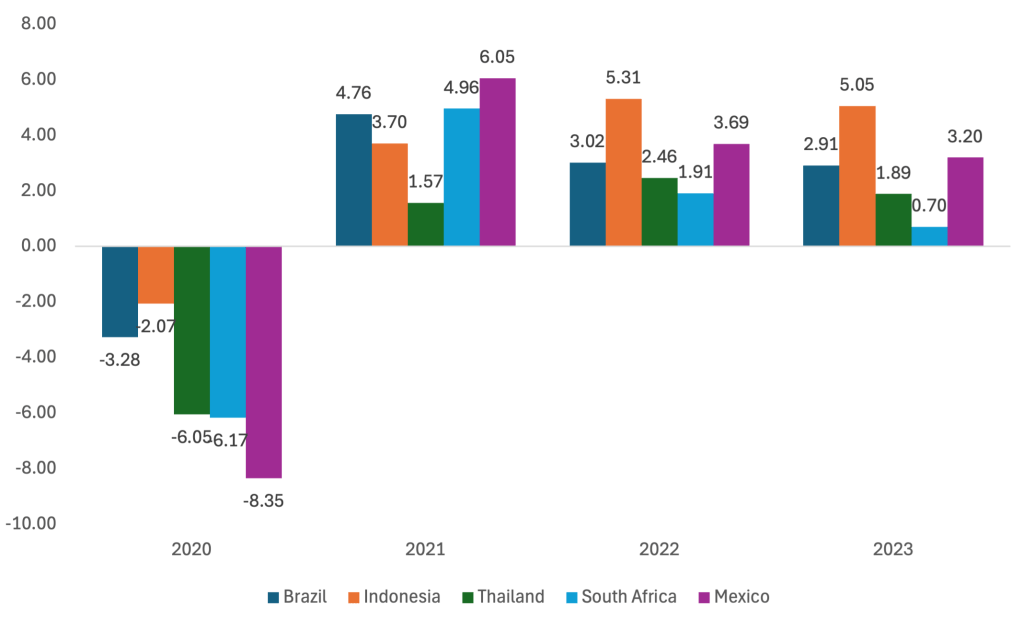
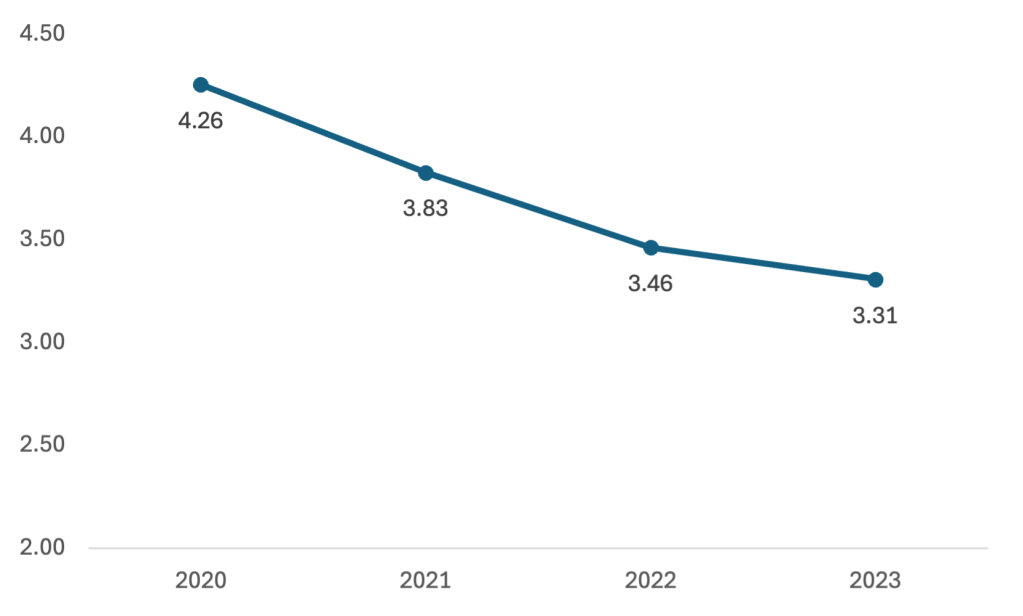
At a glance, Indonesian macroeconomic indicators appear to be performing relatively well. For instance, Indonesia recorded an economic growth of 5.02 percent in 2024, higher than other developing economies like Brazil (3.6 percent), Thailand (3.2 percent), South Africa (0.9 percent), and Mexico (0.5 percent), according to Trading Economics. After the pandemic, Indonesia has also enjoyed relatively increasing and stable economic growth, gradually recovering from the pandemic in 2020 that hit economic growth to a level of -2.07 percent, according to World Bank data (Figure 1). Furthermore, the unemployment rate also shows a seemingly desirable performance with a declining trend from 4.26 percent of the total labor force in 2020 to 3.31 percent in 2023 (Figure 2).
Figure 1. Economic Growth of Selected Developing Countries (in percent). Source: World Development Indicators
Figure 2. Indonesian Unemployment Rate (percent of total labor force). Source: World Development Indicators
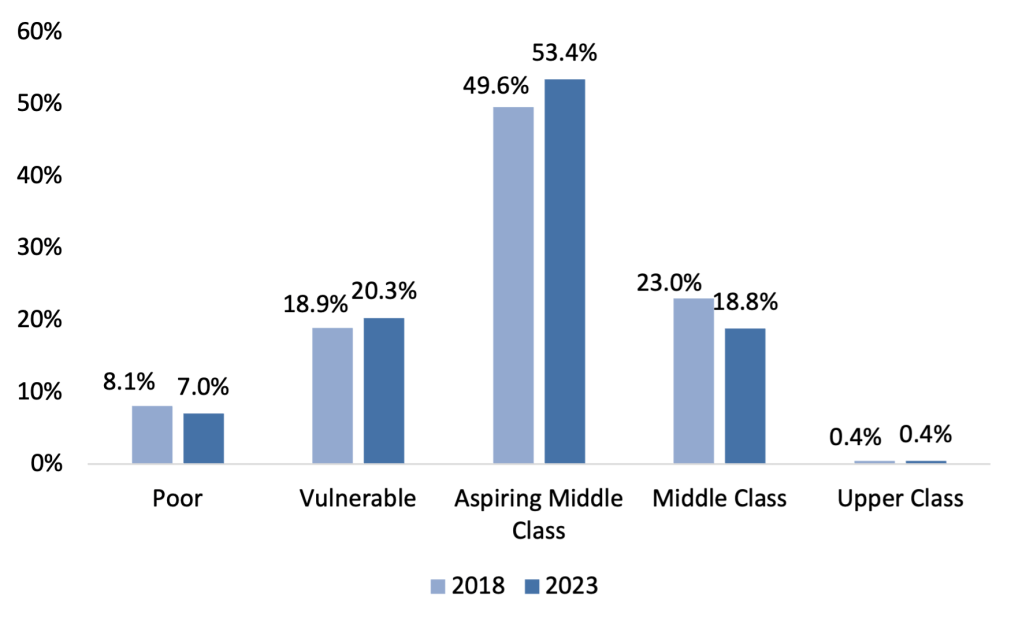
Nonetheless, economic issues at a more micro level were raised due to two significant phenomena: the reduced middle-income class and lower purchasing power. The middle-income class has been decreasing while the income inequality has worsened. There has been a notable decline of 4.2 percentage points in the Indonesian middle class from 23 percent in 2018 to 18.8 percent in 2023, while the share of the vulnerable and the aspiring middle class has risen by 1.4 and 3.8 percentage points, respectively (Figure 3).
Figure 3. Share of Population by Income Class. Source: National Socioeconomic Survey (Susenas)
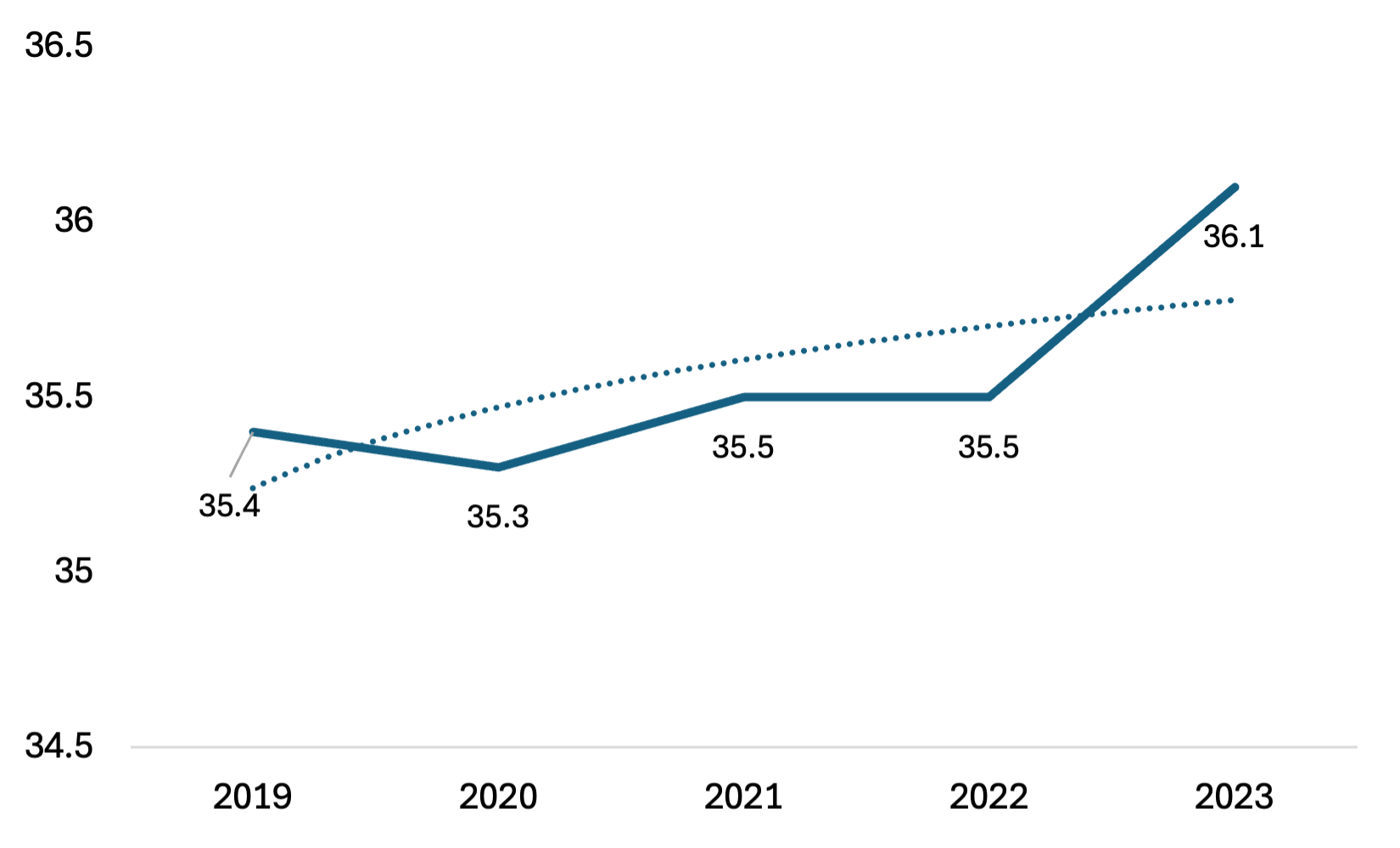
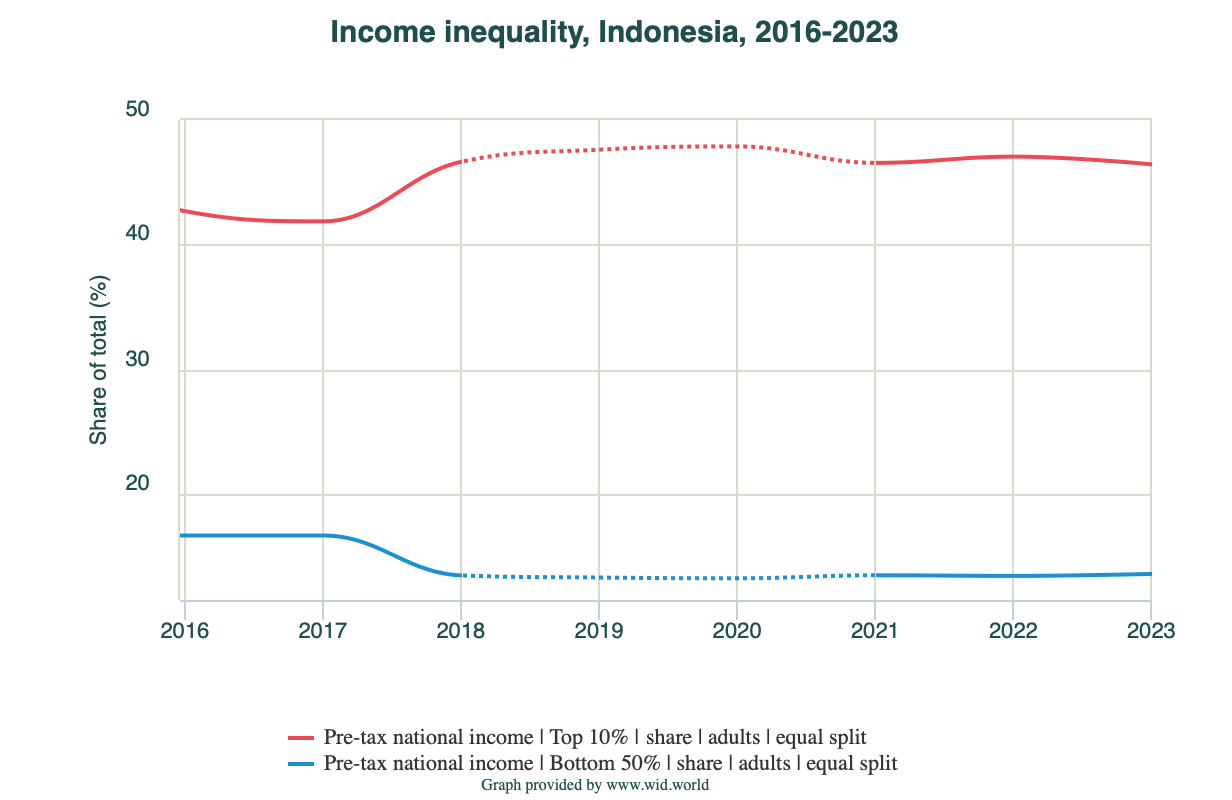
On the other hand, the economic growth might have been unevenly distributed. To illustrate, indicators of income inequality indicate a higher gap in income distribution, such as the widening gap of share of the total national income between the top 10 percent and bottom 50 percent of individuals’ income (right panel in Figure 4) and the increasing trend in the Gini coefficient (left panel in Figure 4), indicating a rising income inequality and uneven redistribution of economic growth and corroborating the argument of declining middle class.
Figure 4. Indonesian Gini Coefficient (left) and Income Inequality (right). Source: World Development Indicators, World Inequality Database.
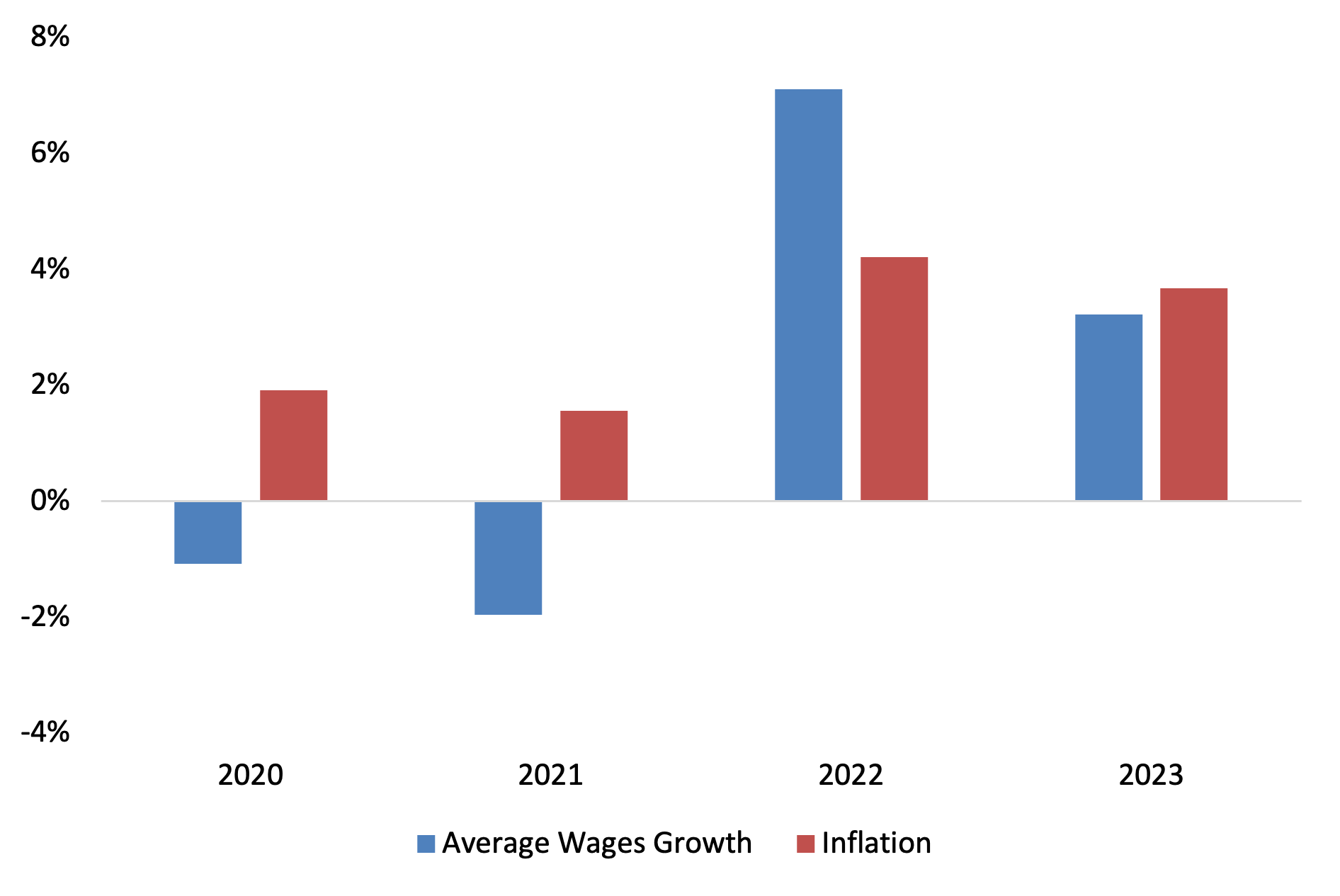
The reduced purchasing power has been raised by many by citing several recent and contemporary indicators within the last year, including the decline in value-added tax, lower consumption growth rate and retail and durable goods sales, lower propensity to saving, and lower level of inflation and deflation happening in the country, which reflects the changes in the short term and hence are translated by some as an anomaly. However, the reduced purchasing power might have resulted from a fundamental and more structural issue in the economy. According to the theory, purchasing power can be reflected by the ratio of wages to price level (P), reflecting the purchasing power of individuals’ earnings ((W/P). This implies that when the price level increases (inflation rate) higher than wage growth, individuals’ purchasing power will erode. Figure 5 indicates that the inflation rate in 2020, 2021, and 2023 was substantially larger than the growth in average wages, which might be attributed to the lowered purchasing power.
Figure 5. Indonesian Annual Average Wages Growth and Inflation Rate. Source: International Labour Organization, World Development Indicators
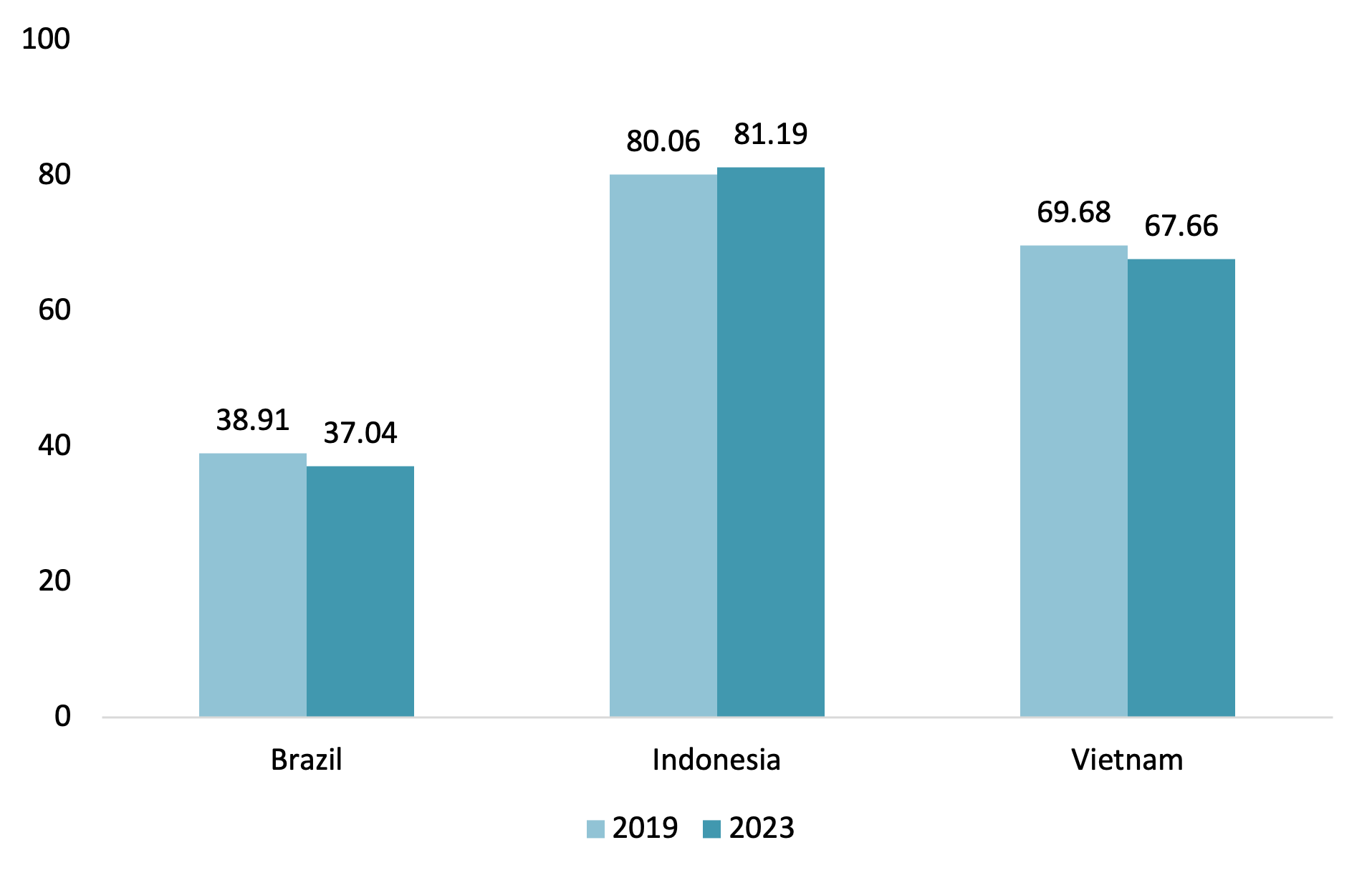
Moreover, the structural issue behind the lower purchasing power could occur even when the unemployment rate has declined. One possible reason might be attributed to the labor force shift from the formal to the informal sector. Statistics Indonesia through Sakernas recorded a substantial growth of approximately 2.5 times in the net new jobs in the informal sector in 2018-2023 relative to the previous period of 2013-2018, while new jobs in the formal sector were degraded considerably by 63.14 percent. Meanwhile, compared to other developing economies like Brazil and Vietnam, Indonesia not only has a larger portion of informal sector employment but also exhibits positive growth in 2023 compared to the rate in 2019 before the pandemic (Figure 6). Informality might be a considerable issue as informal firms operate entirely outside the formal economy, conducting all transactions in cash—whether hiring workers, purchasing inputs, or selling products. They remain persistently informal, exhibit extremely low productivity, and gain little from transitioning to formal status (La Porta & Shleifer, 2014).
Figure 6. Informal Employment Rate. Source: International Labour Organization
What Could be Done?
Given the structural issues affecting consumers’ purchasing power and the middle class in Indonesia, mitigating interventions are inevitable. In the short term, support for the consumers, particularly for the middle class such as through electricity tariff discounts, might be effective in improving their purchasing power while ensuring the reallocation of the government budget cut that has been undergone to sectors that produce significant multiplier effects to the economy, such as sustainable employment creation in the formal sector.
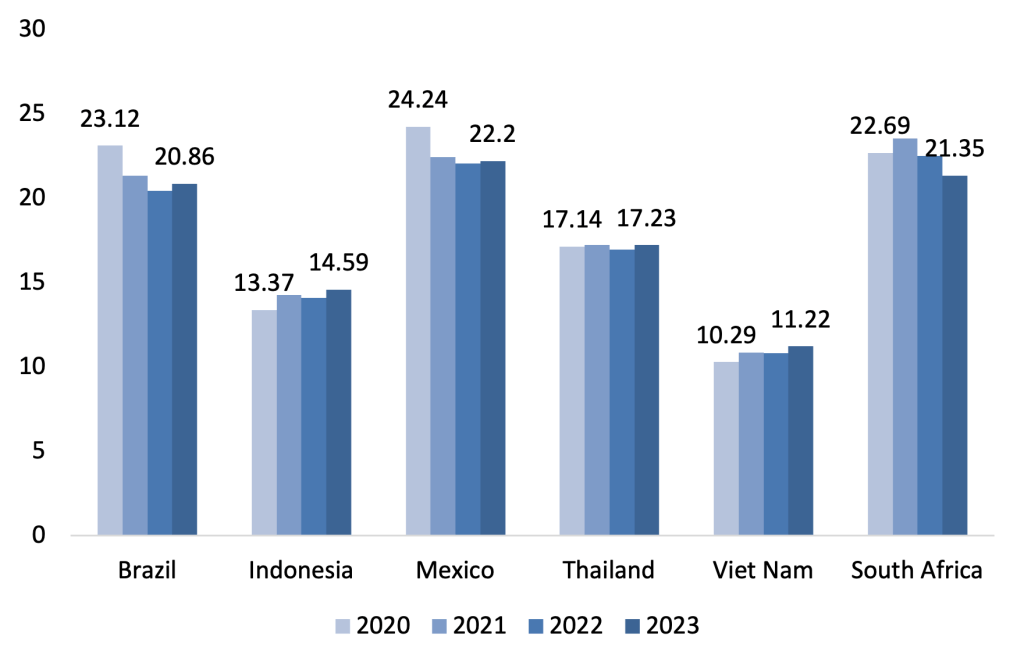
The more strategic approaches might require attracting foreign investment to achieve higher economic growth, restore purchasing power, and strengthen the middle class through formal employment creation. The approaches would be taken in the medium to longer term, targeting primarily two objectives: productivity and institutions. Productivity is related to competitiveness, and these variables substantially influence the consideration of foreign investors to invest in an economy. Nonetheless, several indicators of productivity of production factors in Indonesia indicate the need for improvement. First, labor productivity in Indonesia is relatively lower than tantamount to developing economies (Figure 7), but opportunity rises as the trend is positively growing. Accordingly, labor productivity should be enhanced through education and training, innovation and research and development encouragement, and competitive and high-value industries fostering to make Indonesia more competitive, which would eventually contribute to higher economic growth.
Figure 7. Output per Hour Worked (in US dollar 2021 constant, PPP). Source: International Labour Organization
Second, Indonesian capital investment is arguably inefficient, as indicated by the incremental capital-output ratio (ICOR) of 6.33 in 2023, meaning that an additional capital investment of 6.33 percent is needed to produce a 1 percent economic growth. It is worth noting that a higher ICOR reflects that more investment is needed to produce the same growth level, indicating higher inefficiency. Indonesia’s ICOR was higher than the ideal ICOR (between 3 and 4) and also higher compared to ASEAN members, including the Philippines (3.7), Thailand (4.4), Malaysia (4.5), and Vietnam (4.6). Therefore, to attract more investment, Indonesia should improve its efficiency by enhancing productivity, adopting new technologies and digitalization, optimizing investment allocation, and reducing capital waste.
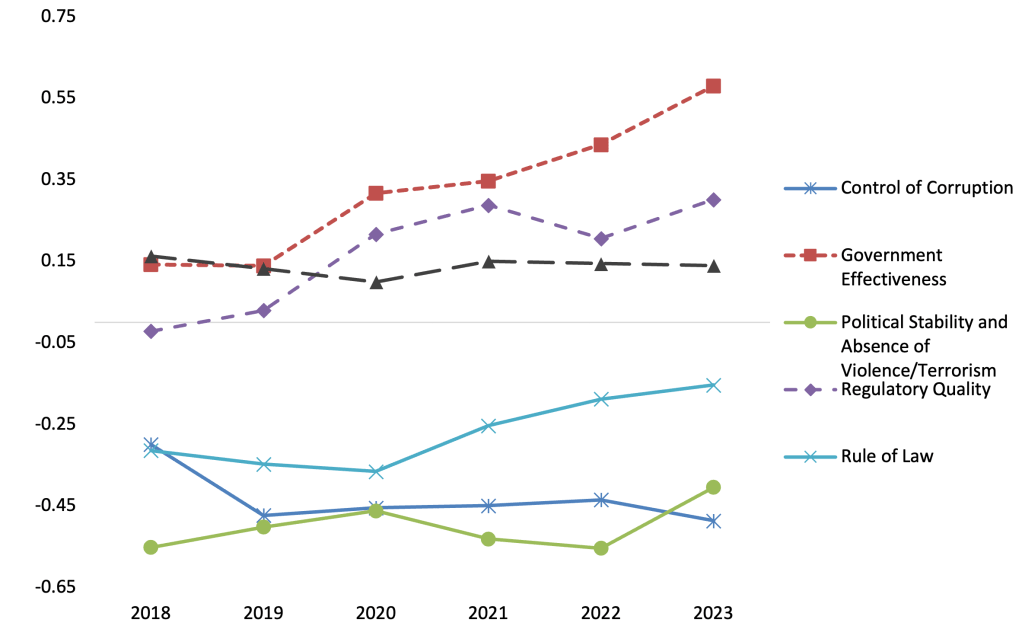
Additionally, Indonesia needs to reform its institutions to improve institutional quality, particularly in the rule of law, control of corruption, and political stability. Figure 8 shows governance aspects in Indonesia, indicating that there has been better improvement in the quality of public services, the capacity of the civil service and its independence from political pressures, the quality of policy formulation and implementation, regulatory quality, and public participation. However, Indonesia is still lagging in economic agents’ confidence in the rules of society, control of corruption practices and political stability, and absence of violence.
Figure 8. Indonesian Institutional Quality. Source: World Governance Indicator
Meanwhile, institutional quality attracts foreign direct investment inflows (Khan et al., 2023), is associated with lower inequality and higher economic growth and human development levels, and helps manage the benefits of commodity exports while mitigating the developmental costs of commodities export dependence (Natanael, 2024). Therefore, institutional reform could be targeted at a more stable rule of law to enhance confidence in and abide by the rules of society, the quality of contract enforcement, property rights, the police, and the courts, as well as the likelihood of crime and violence, improved corruption control and political stability through reliable and society-oriented regulations and policies.
In conclusion, although some Indonesian macroeconomic indicators, such as economic growth and the unemployment rate, suggest a relatively stable performance, they might not necessarily be the entire picture of the economy. The structural issues might be overlooked behind the recent reduced number of middle-class and lower purchasing power phenomena, including the increasing informality and stagnated wages. Thus, several actions might be urgently needed to resolve the issues, particularly in the medium to longer term, such as improving labor productivity and investment efficiency as well as enhancing institutional quality in the rule of law, control of corruption, and political stability.
References Khan, H., Dong, Y., Bibi, R., & Khan, I. (2023). Institutional quality and foreign direct investment: Global evidence. Journal of the Knowledge Economy, 1-45.
La Porta, R., & Shleifer, A. (2014). Informality and development. Journal of economic perspectives, 28(3), 109-126.
Natanael, Y. (2024). Is Less Commodity Dependence Better for Economic Equality, Economic Growth, and Human Development?. Global Journal of Emerging Market Economies, 09749101241300637.
Cross-border transactions involving services include the movement of either the producer, the consumer, or capital for investment purposes. The General Agreement on Trade in Services (GATS) defines cross-border trade in services using four modes of supply: Mode 1 involves the flow of services from one country’s territory to the trade partner’s territory; Mode 2 consists of the collection of services from one country to consumers from another country; Mode 3 involves services provided by a service supplier of one country in the territory of another country, including through ownership or subsidiaries; and Mode 4 involves services provided by a service supplier of one country through the presence of natural persons in the territory of another country. Modes 1 and 2 could reflect the free flow of goods, Mode 3 represents the free flow of investment, and Mode 4 reflects the free flow of people. Hence, the free flow of people can be linked to the free flow of goods and investment.
Recent technological advancements have facilitated cross-border transactions through the digital trade of goods and services. This type of trade encompasses all digitally ordered and delivered goods and services. The study by the Organisation for Economic Co-operation and Development, the International Monetary Fund, and the World Trade Organization (OECD, IMF, and WTO 2020) defines digitally delivered trade as international transactions electronically delivered remotely through computer networks, including insurance and financial services, professional services, sales and marketing, research and development, and education services (UNCTAD 2022). On the other hand, digitally ordered trade refers to international purchases and sales of goods or services through computer networks designed for this purpose, similar to e-commerce. The data movement across borders is thus an essential element in the growth of service supply models, as well as production networks (González 2019). Data also links firms and consumers globally, facilitating the management of global production networks and business-to-business transactions within them and transactions between consumers or businesses purchasing from each other through online platforms (OECD 2019).
The digital economy plays a crucial role in the international trade of the ASEAN member states, particularly for their micro, medium, and small-sized enterprises (MSMEs). The ASEAN digital economy is rapidly growing, with the market size expected to exceed $360 billion by 2025 and grow to $1 trillion by 2030 due to the growth in e-commerce, digital financial services, and food delivery (Google, Temasek, and Bain & Company 2022). The digital platform business alone has created 160,000 direct jobs and an additional 30 million indirect jobs. The e-commerce industry thrives, with 20–25 million unique merchants operating across marketplaces, direct-to-consumer, and grocery platforms, according to e-Conomy SEA 2023.
Digitalization offers new opportunities for MSMEs to expand their business and increase productivity by using digital tools and technologies to reduce production costs. According to a survey conducted by the International Chamber of Commerce (ICC) and Google (2022), 80% of MSMEs in ASEAN have increased their use of digital tools in 2020–2021, indicating these businesses’ growing adoption of digital tools and technologies. This shift toward digitalization presents new opportunities for MSMEs in the region to reduce production costs, enhance business productivity, and expand their international reach. The adoption of digitalization by MSMEs is significant for their internationalization process, as increased international exposure has been linked to higher wages and increased job creation for productive firms (Wagner 2012). By lowering trade costs and connecting supply and demand through digital platforms, MSMEs can overcome constraints associated with exporting and tap into new markets (González 2019).
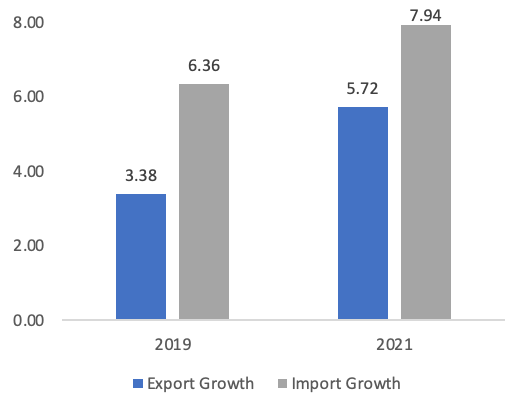
The COVID-19 pandemic has led to an increase in digital use in ASEAN. Taking a sample of six member states (Indonesia, Malaysia, Philippines, Singapore, Thailand, and Viet Nam), there was an increase in the average growth of export in digitally deliverable services from 3.38% in 2019 to 5.72% in 2021 (Figure A7.1 in the Appendix), exhibiting positive growth of digital trade in services particularly post-pandemic and indicating the utilization of electronic trade administration documents. Using data from Google, Temasek, and Bain & Company (2022), the six ASEAN member states have made notable recent progress in developing a digital economy. For example, the aggregate gross merchandise values of the digital economy in these countries have jumped significantly, from $102 billion in 2019 to $194 billion in 2022 (Figure A7.2). This fact indicates that countries have progressed in establishing and maintaining their domestic electronic transactions framework. Moreover, it suggests establishing digital identity and authentication systems and e-invoicing for local transactions (Tong, Li, and Kong 2021).
Those movements toward digitalization might become one of the main strengths of the digital economy to expand business within local markets in ASEAN member states, including for micro and small and medium-sized enterprises (MSMEs). According to the World Economic Forum Survey (2021), most MSME owners wanted to further digitalize their lives, indicating that digitalization would likely accelerate. Most (74%) MSME owners in ASEAN have implemented digitalization for more than half of their tasks. This fact indicates the influence of digitalization, as those who have already acquired a satisfactory level of competence and benefitted from its advantages are now motivated further to enhance their digitalization efforts (WEF 2021). Another aspect that could strengthen the digital economy and cross-border transactions is government provision to promote access and inclusion of information technologies for the people, measured by the E-government Development Index. While the overall index of the six ASEAN member states ranges from middle inclusivity to very high inclusivity, human capacity shows a promising potential with an index ranging from high to very high inclusivity, as shown in Figure 1.
Figure 1. Average International Trade in Digitally Deliverable Services Growth of Six ASEAN Member States (%). Source: UNCTAD Stat.
The opportunity for cross-border transactions using digital trade could be encouraged by at least three main features. First is from the demand side, where there was an increasing trend in the use of digital technology. For instance, there was a rising trend in internet connectedness that allows people to access online products and services (World Bank 2019), the number of social media users with a regional social media penetration at 63.7% (Statista 2023), and consumer spending on online time that reach ten hours a day in average (Google, Temasek, and Bain & Company 2019). These trends could encourage Southeast Asian businesses to innovate, adopt new technologies, and sell online (Hoppe, May, and Lin 2018), and more MSMEs might be favored by the low-cost, mass form of advertising that can influence consumers with product research and brand engagement. On the supply side, the infrastructure of information and communications technology (ICT) also supports the emerging use of digital technology for cross-border transactions. As indicated by Table 1, the Telecommunication Infrastructure Index in the six ASEAN member states, for example, could be classified as high for Indonesia, Philippines, and Vietnam, and very high for Malaysia, Singapore, and Thailand.
Country
E-government Development Index
Online Services
Telecommunication Infrastructure Index
Human Capital Index
Overall Classification
Singapore
0.913
0.962
0.876
0.902
Very high inclusivity
Thailand
0.766
0.776
0.734
0.788
Very high inclusivity
Malaysia
0.774
0.763
0.795
0.765
Very high inclusivity
Brunei Darussalam
0.727
0.587
0.837
0.757
High inclusivity
Indonesia
0.716
0.764
0.640
0.744
High inclusivity
Viet Nam
0.679
0.648
0.697
0.690
High inclusivity
Philippines
0.652
0.630
0.564
0.763
High inclusivity
Cambodia
0.506
0.418
0.561
0.538
High inclusivity
Myanmar
0.499
0.307
0.608
0.583
Middle inclusivity
Lao PDR
0.376
0.301
0.282
0.547
Middle inclusivity
Table 1.E-government Development Index. Source: UN E-Government Knowledgebase
Second, the utilization of quick response (QR) payment for cross-border financial services within the ASEAN region presents an opportunity to enhance payment connectivity and support cross-border trade, investment, tourism, and other economic endeavors. The cross-border QR payment service enables the payment for goods and services across ASEAN member countries. Currently implemented in Vietnam, Indonesia, Malaysia, Singapore, and Cambodia, this service holds particular advantages for MSMEs by facilitating their engagement in international markets. Moreover, it caters to the needs of individuals such as tourists (Mode 2), business visitors (Mode 4), and those making purchases from overseas providers (Mode 1), who desire to make QR code-based payments for goods and services when abroad. This fact aligns with the demand for digital payment solutions expressed by three-quarters of MSME owners in the region (WEF 2021).
Third, the significant role of MSMEs in ASEAN presents another area of potential optimization. Southeast Asia alone houses a staggering 71 million MSMEs, accounting for 97% of all businesses in the region (Tan 2022). Despite their abundance, MSMEs in the region contribute an average of 40.5% to each country’s gross domestic product (GDP) and 19.2% to the total export value in 2020. This situation creates an opportunity for digital platforms to foster the growth of MSMEs by enhancing operational efficiency, expanding customer reach, and facilitating access to finance. Digital technologies have been suggested to streamline processes, support data-driven decision-making, and automate routine tasks, while the Internet has significantly reduced the costs associated with service delivery, marketing, ordering, and payment for MSMEs (Beschorner 2019; Tan 2022).
While the digital economy offers new opportunities for cross-border transactions among the ASEAN member states, it also raises considerable challenges for policy in a region where characteristics and regulatory differences between countries remain. The first challenge appears from the need for digital skills. Those with limited initial exposure to digital tools during the pandemic without appropriate digital skills did not experience the benefits of digitalization (WEF 2021). The digital skills and talent in ASEAN had the lowest score of 48.21 among the six pillars of the ASEAN digital integration index 2021, indicating a lack of a capable digital workforce risk is the most significant factor impeding digital integration and growth (ASEAN Secretariat 2021a). As a result, MSMEs have a high demand to improve digital literacy, provide digital skills training for MSME employees, and enhance the accessibility of quality internet and digital devices (WEF 2021). Nevertheless, the concentration of digital tool learners and teachers in big cities leaves small towns and rural areas at risk of being left behind in digitalization. It prevents the transfer of digital skills between generations.
Moreover, it is worth noting that the level of development in digital technology inclusivity in government and private sectors varies considerably across the ASEAN member states. This fact could be reflected by the e-government index and business-to-consumer (B2C) index. While Singapore (0.91), Malaysia (0.77), and Thailand (0.77) have very high e-government index values in 2022 (Table 1), the Lao People’s Democratic Republic (Lao PDR) and Myanmar are still lagging with index values of 0.38 and 0.50, respectively. For the B2C index, shown in Table 2, Singapore (94.4) and Malaysia (81.3) are at the top of the list, while Cambodia (31.1) and Myanmar (24) are relatively far behind. Deficiencies hinder Indonesia’s B2C e-commerce in its logistics and payment systems, while Malaysia’s internet service quality is a limiting factor. On the other hand, Thailand benefits from strong logistics capabilities but encounters issues with the quality of its internet services (Lee 2021).
Economy
Secure Internet Servers (normalized, 2019)
2020 Index Value
Index Value Change (2019–20 data)
Singapore
94
94.4
-0.4
Malaysia
71
81.3
-2.1
Thailand
59
76
2
Viet Nam
64
61.6
0.8
Indonesia
60
50.1
0
Philippines
39
44.7
-5.1
Lao PDR
30
40.6
5.4
Cambodia
42
31.1
0.3
Myanmar
22
24
-2.9
Table 2. B2C Index. Source: UNCTAD B2C E-Commerce Index 2020
Additionally, there are disparities in the readiness of countries to adopt and utilize e-payment systems. These gaps primarily stem from variations in regulatory and policy frameworks and the availability of innovative products and services (Chen and Ruddy 2020). For example, the portion of the population in Cambodia, Indonesia, the Lao PDR, Myanmar, and the Philippines who made a digital in-store merchant payment using a mobile phone or made a digital merchant payment was still below 20% in 2021 (Table 3). This fact poses a challenge for the implementation of cross-border QR payment services. Another common challenge is that ASEAN member states are not all equally well equipped to deal with the privacy and security challenges that digital technologies can pose and have equal access to broadband networks as the essential infrastructure of the digital economy, resulting in lower adoption of these technologies, especially amongst MSMEs (Box and Lopez-Gonzalez 2017). MSMEs also face a more pronounced lack of familiarity with technological tools (ICC and Google 2022).
Economy
Made or received a digital payment (%, age 15+)
Used a mobile phone or the internet to buy something online (%, age 15+)
Made a digital in-store merchant payment: using a mobile phone (%, age 15+)
Made a digital merchant payment (%, age 15+)
Cambodia
26%
4%
1%
3%
Indonesia
37%
18%
6%
13%
Lao PDR
21%
10%
6%
9%
Malaysia
79%
50%
25%
50%
Myanmar
40%
20%
10%
16%
Philippines
43%
36%
12%
18%
Singapore
95%
58%
50%
83%
Thailand
92%
51%
57%
63%
Viet Nam
46%
40%
18%
24%
Table 3. Selected Indicators of The Global Findex Database (2021). Source: World Bank Global Findex Database
It is also important to note that the economic openness degree of ASEAN member states plays an important role in utilizing the digital economy, as the higher degree of economic openness for countries such as Singapore, Viet Nam, Malaysia, and Thailand indicates that digital trade is likely to be higher in these countries (Lee 2021). Therefore, the digital economy is at risk due to regulations and restrictions on digital trade. According to the OECD database, the digital services trade restrictiveness index of ASEAN members indicates a relatively open to foreign digital services (Table 4). However, for sector-specific restrictiveness, the services trade restrictiveness index for accounting in Thailand and legal in Indonesia is close to one, indicating they are almost entirely closed to foreign service providers (Table 5). Aligned with the findings of the International Chamber of Commerce (ICC) and Google (2022), the regulatory environment and challenges in logistics act as significant barriers to exports, with half of MSME owners identifying foreign and domestic regulations, along with delays and high logistics costs related to customs clearance, as the primary obstacles to exporting.
Economy
2014
2022
Brunei Darussalam
0.232
0.232
Cambodia
0.404
0.405
Indonesia
0.307
0.307
Lao PDR
0.523
0.499
Malaysia
0.127
0.127
Philippines
0.127
0.127
Singapore
0.203
0.200
Thailand
0.141
0.141
Viet Nam
0.106
0.146
Table 4. Digital Services Trade Restrictiveness Index. Source: OECD Database
Economy
Logistics cargo-handling
Logistics storage and warehouse
Logistics freight forwarding
Logistics customs brokerage
Accounting
Legal
Indonesia
0.424
0.362
0.325
0.290
0.698
0.920
Malaysia
0.256
0.230
0.252
0.255
0.283
0.653
Singapore
0.285
0.292
0.282
0.239
0.203
0.325
Thailand
0.428
0.472
0.385
0.378
1.000
0.580
Viet Nam
0.427
0.303
0.264
0.268
0.251
0.569
Table 5. Services Trade Restrictiveness Index for Selected Sectors and ASEAN Member States (2022). Source: OECD Database
Growing concerns regarding data privacy and security, among other factors, have prompted calls for more extensive and comprehensive regulation of the Internet and its underlying data transfers. Governments are updating their data-related rules and implementing two measures: limitations on cross-border data transfers, primarily to safeguard privacy, and requirements for local data storage, either for audit purposes or to protect privacy (OECD 2019). Restrictions on data transfers can have significant trade implications when they impact the movement of data, which is essential for global value chain coordination or for MSMEs to engage in trade.
Existing Policy
At the regional level, ASEAN has concluded various agreements and policies to promote the digital economy and cross-border transactions. The ASEAN Digital Integration Framework and its Action Plan serve as a comprehensive blueprint for digital integration efforts, covering trade facilitation, data flows, electronic payments, entrepreneurship, and talent. Furthermore, the Bandar Seri Begawan Roadmap, issued in 2021, focuses on accelerating ASEAN’s economic recovery and digital economy integration in response to the challenges posed by the COVID-19 pandemic. Additionally, the Masterplan on ASEAN Connectivity 2025 recognizes the importance of backbone infrastructure, regulatory frameworks for new digital services, sharing best practices on open data, and equipping MSMEs with the necessary capabilities to leverage new technologies and enhance digital connectivity (ASEAN Secretariat 2016).
The ASEAN Data Management Framework and Model of Contractual Clauses for Cross-Border Data Flows are crucial in digital data governance. The Data Management Framework guides businesses in establishing effective data management systems that include data governance structures and safeguards. In contrast, the Model of Contractual Clauses offers standardized contractual terms and conditions that can be integrated into legally binding agreements when businesses transfer personal data across borders. These clauses streamline negotiations, reduce compliance costs and time that particularly benefit small and medium-sized enterprises (SMEs), and ensure personal data protection during cross-border transfers. Moreover, the ASEAN framework on Digital Data Governance, adopted in 2017, establishes regulatory guidelines to facilitate the free flow of data within the region while upholding necessary data protections during transfers, encouraging a dynamic data ecosystem.
The ASEAN Work Programme on Electronic Commerce addresses various aspects of digital trade, including consumer protection, the security of electronic transactions, and payment systems. It focuses on essential areas such as trade facilitation, education and technology competency, electronic payment and settlement, online consumer protection, cybersecurity, and logistics to enhance e-commerce. Moreover, the ASEAN Digital Masterplan 2025 offers a comprehensive roadmap for ASEAN member states to improve their citizens’ participation in the digital economy, highlight the importance of developing advanced digital skills as a critical intervention, and set a direction to achieve digital inclusivity within the ASEAN community by improving access to digital technologies for people across the region (ASEAN Secretariat 2021a).
Regarding trade facilitation, the ASEAN Single Window (ASW) is a regional platform enabling the electronic exchange of shipment information among the 10 Southeast Asian countries. The ASW integrates the National Single Windows of ASEAN member states, promoting seamless data exchange between them. However, the full adoption of the ASEAN Customs Declaration Document (ACDD), an electronic document facilitating the exchange of export declaration information between member states, is yet to be achieved by all countries. Utilizing the ACDD could reduce clearance time for import consignments. However, it is an optional system for traders exporting goods to ASEAN member states ready for exchange, including Brunei Darussalam, Cambodia, Indonesia, Malaysia, Myanmar, Philippines, Singapore, and Thailand. A recent trade facilitation initiative is the Initiative for ASEAN Integration Work Plan IV (ASEAN Secretariat 2020a), which aims to enhance standards harmonization, facilitate trade, and promote e-commerce within ASEAN. It focuses on implementing trade facilitation measures, improving technical capacity, and strengthening legal frameworks for e-commerce.
At the country level, ASEAN member states have different policy priorities for the digital economy and cross-border transactions, according to the International Trade Administration. For instance, Thailand focuses on digital infrastructure with the Thailand Industry 4.0 policies (Kohpaiboon 2020), including constructing a broadband network for all villages. Singapore emphasizes digital economy agreements to support businesses, particularly SMEs, in digital trade. Indonesia prioritizes digital infrastructure to enhance internet access, promoting digital government such as through the e-government system (Sistem Pemerintahan Berbasis Elektronik) and empowering digital skills through various initiatives, for example, the National Movement on Digital Literacy and the Digital Talent Scholarship program. Digital cross-border transactions are also regulated by the Minister of Trade Regulation No. 50/2020, which covers requirements for business licenses and the appointment of Indonesian representatives by foreign e-commerce businesses.
Recommendations
Promoting data sharing with adequate protection and security measures. To achieve this, one effective approach might be adopting a data transfer mechanism such as the standard contract clauses used in the EU as a reliable legal platform for regional data sharing under the existing ASEAN policies on digital data governance. The data transfer mechanism might summarize sets of contractual responsibilities and conditions to ensure that the transferred data receives the same level of protection as required by the regulations. By utilizing standardized templates, this mechanism streamlines the agreement process rapidly and more efficient for specific data flows. Hence, building trust and commitment among ASEAN member state governments is crucial for enabling data sharing.
Streamlining regulations governing the adoption of new technologies in digital payment systems in response to the evolving digital industry landscape. Considering certain ASEAN members have not implemented common digital payment systems such as the QR payment, implementing harmonized digital payment system regulations at the regional level across ASEAN member countries might be a practical strategy to embody the action while ensuring a coherent method to manage digital payment and transaction innovations.
Offering guidance to MSMEs on leveraging digital tools and technologies for exports. Addressing the knowledge gap within the MSME community by providing tailored support can enhance their skills and capabilities. Enhancing digital literacy and upskilling programs for the younger generation to meet the demands of employers and prepare citizens and businesses for the rapidly evolving digital landscape. Collaborating with the private sector to design relevant digital skills roadmaps and accelerating their implementation in prioritized sectors is essential.
References Asian Development Bank (ADB). 2023 ASEAN and Global Value Chains: Locking in Resilience and Sustainability. Manila: ADB.
ASEAN Secretariat. 2016. Master Plan on ASEAN Connectivity 2025. Jakarta: ASEAN.
_____. 2020a. Initiative for ASEAN Integration (IAI) Work Plan IV (2021-2025). Jakarta: ASEAN.
_____. 2020b. Report on Promoting Sustainable Finance in ASEAN. Jakarta: ASEAN.
_____. 2020c. ASEAN State of Climate Change Report. Jakarta: ASEAN.
_____. 2021a. ASEAN Digital Integration Index Report 2021. Jakarta: ASEAN.
Beschorner, N. 2021. The Digital Economy in Southeast Asia: Emerging Policy Priorities and Opportunities for Regional Collaboration. In C. Findlay and S. Tangkitvanich, eds. New Dimensions of Connectivity in the Asia-Pacific. Canberra: ANU Press, pp. 121–156.
Box, S., and J. Lopez-Gonzalez. 2017. The Future of Technology: Opportunities for ASEAN in the Digital Economy. In S. Tay and J. Tijaja, eds. Global Megatrends: Implications for the ASEAN Economic Community. Jakarta: ASEAN Secretariat, pp. 37–60.
Chen, L. and L. Ruddy. 2020. Improving Digital Connectivity: Policy Priority for ASEAN Digital Transformation. ERIA Policy Brief7. Jakarta: Economic Research Institute for ASEAN and East Asia.
González, L. 2019. Fostering Participation in Digital Trade for ASEAN MSMEs. OECD Trade Policy Papers, No. 230.
_____. 2022. e-Conomy SEA 2022: Through the Waves, Towards a Sea of Opportunity. 27 October. https://economysea.withgoogle.com. (accessed 15 May 2023).
Tong, S., Y. Li, and T. Kong. 2021. Exploring Digital Economic Agreements to Promote Digital Connectivity in ASEAN. ERIA Working Papers DP-2021-24. Jakarta: Economic Research Institute for ASEAN and East Asia.
United Nations Conference on Trade and Development (UNCTAD). 2022. Digital Trade: Opportunities and Actions for Developing Countries. UNCTAD Policy Brief No. 92.
Wagner. J. 2012. International Trade and Firm Performance: a Survey of Empirical Studies Since 2006. Review of World Economics 148(2): 235–267.
Having an account and browsing the social media LinkedIn would expose us to updates and news about our connections’ milestones and achievements. How do we respond to such news and information? Are we sincerely happy for them; does it lead us to introspect our life and accomplishments thus far; does it motivate us, or do we just ignore it?
Conceptually, we might know it would be better not to compare our well-being and accomplishments with others. Nevertheless, it might not be that simple in practice as it is relatively easy to retrieve external news about other individuals’ well-being and accomplishments through social media. Even though that kind of news should not affect our lives directly and rationally, we are often affected by that information for any reason. So, how could some external news affect us? It might mainly be because the news is relevant to our concerns, such as careers or relationships. For instance, one might have a career aspiration to work in a certain field and get some information about other individuals’ progress in their careers in the respective field.
How do we isolate ourselves from external noise and distraction? In other words, the way to be content with our lives and to be full with ourselves. There might not be a simple answer to this question. Yet, the general idea still holds: find something meaningful to do related to our concerns so that the specific external information related to our concerns might be turned into beneficial for us. For instance, information about one’s accomplishment or goals related to our concern could be turned into motivation and a reminder to stay focused on things we could do given our resources. In this case, we could shift the focus from the other individual to ourselves and use the information affecting us negatively to initiate actions that pave the way to clear our concerns.
How do we overcome situations that unintentionally and indirectly negatively affect us? It might be useful to rationalize our minds and beliefs and shift our perspective to get closer to the positive spectrum. Instead of asking why it seems like we are not progressing enough, optimizing our decisions, or not in the right position that we could be at the present, we could start asking what is something that we can learn from our situation and others for the better next steps in our courses of action.
It is worth noting that as we are human beings, there might be negative emotions that could catch us at any time, even by a random trigger, posing challenges in our effort to keep going on with our goals and solving our concerns. The challenges might come in several forms. First, a mindset bias of overgeneralizing a situation or an opportunity. The anxiety that a relatively minor event will lead to a significant impact that might not necessarily happen and the thinking that there will not be another chance in the future if we are unable to take it now is misleading.
Another bias might appear in terms of a fixated mind as if there is only one way to solve our concerns or to achieve our objectives. Events and chances might be way too complex for us to entirely comprehend, which in turn, could intimidate us and lead to the thinking that there is only a certain path that has empirically been proven by other individuals’ cases. Conversely, there might be multiple ways to reach the endgame as long as they are not considered violations. Each individual with a relatively similar endgame could end up at that point through different processes and approaches. It might be more of our response that would play a considerable role in whether or not we arrive at the desired endgame.
To conclude, the saying that all roads lead to Rome might hold to a considerable extent. At least, it leads us to avoid an overgeneralizing bias and a fixated mindset and encourages us to keep going all the way to our endgame.
The COVID-19 pandemic has led to considerable shifts in job patterns and methods. Working from home (WFH) is one of the substantial shifts occurring due to the pandemic, in which some employers keep this work pattern even after the pandemic has ended. While some people prefer to work from the office, others find it more beneficial to work from home. By taking workers’ perspective, this post argues that WFH might be considered a positive change that should be kept for the long-run work pattern whenever possible.
To begin, it is worth identifying factors that drive firms to keep implementing WFH. In their study, Barrero et al. (2023) suggest that computer-intensive, analytically-oriented jobs in urban centers encourage workers to work from home to avoid commuting, saving their time and increasing their productivity. Moreover, infrastructure such as a high-quality internet network, enough space for a home office, and advanced managerial practices around performance assessment and monitoring are other driving forces to keep working from home. From the demographic aspect, WFH intensity is positively associated with the education level of individual workers, young and adult individuals, and the presence of children at home.
Next, why should we consider keeping the work-from-home culture whenever possible? From the point of view of individual workers, WFH could increase productivity and efficiency by reducing the monetary and time costs needed to commute to the workplace. For example, Gibbs et al. (2023) found that the savings in commute time significantly overcome the additional 1.5 hours each day that employees put into their jobs after fully remote working. Therefore, they could individually manage their time allocation efficiently to work and fulfill their tasks on time, assuming they have a time-discipline manner, and save some portion of income initially taken for commuting. Moreover, existing studies reveal that working from home some days a week not only enhances productivity but also leads to happier employees (Choudhury et al., 2022; Bloom et al., 2023), linking productivity gains with higher effort levels of happier employees, quieter work environments at home, and the time savings that employees place back into their jobs.
On the other hand, it should be acknowledged that there are concerns related to working remotely. Barrero et al. (2023) explain that the first concern relates to motivation and self-control, as working from the office might act as a commitment device to work under the supervision of the employer. Hybrid working arrangements might be an alternative to address this concern since they enable in-person meetings and simultaneously allow monitoring and coordination. Moreover, working at the office sometimes does not warrant that workers will be productive all day as some distractions might occur. The second issue concerns the possibility that shifting to WFH could slow innovations down by undermining the idea-generating capabilities. However, recent technological developments have supported WFH with higher quality virtual communications, such as the internet, better broadband infrastructure, video teleconference, cloud storage, and better software tools for remote collaboration.
It is imperative to note that working from home (WFH) might not be possible for all types of jobs. For example, in front-line retail, the tourism industry (whether skilled or semi-skilled), transportation, construction, manufacturing, hospitality, and janitorial and cleaning services often require on-site presence, given that these entail face-to-face interactions with customers or colleagues and completion of tasks using specialized equipment (Barrero et al., 2023). In principle, the suitability of a job for remote work varies significantly along a spectrum (Barrero et al., 2023). Tasks that are inherently unsuitable for remote work cluster at one end, while those conducive to remote arrangements cluster at the other. If the tasks associated with a job predominantly fall on the less-suitable end, remote work is less likely to be adopted, and vice versa. Additionally, adopting remote work is influenced by evolving perceptions of productivity in a WFH setting, the quality of available remote work tools, and an organization’s ability to effectively manage remote employees.
To conclude, working from home or hybrid working could be prospective mechanisms of working for several types of jobs in the future. They offer benefits from increasing productivity and time efficiency of workers. While they might not be possible for occupations requiring physical presence at the workplace, working from home or hybrid working could be a beneficial option for other jobs that could be done remotely.
References Barrero, J. M., Bloom, N., & Davis, S. J. (2023). The evolution of work from home. Journal of Economic Perspectives, 37(4), 23-49.
Bloom, N., Han, R., & Liang, J. (2022). How hybrid working from home works out (No. w30292). National Bureau of Economic Research.
Choudhury, P., Khanna, T., Makridis, C. A., & Schirmann, K. (2024). Is hybrid work the best of both worlds? Evidence from a field experiment. Review of Economics and Statistics, 1-24.
Gibbs, M., Mengel, F., & Siemroth, C. (2023). Work from home and productivity: Evidence from personnel and analytics data on information technology professionals. Journal of Political Economy Microeconomics, 1(1), 7-41.
There are questions that lead to findings and innovations, some questions function as guidance, There are questions that leave puzzles, some questions are better left unanswered. There are questions that are irrelevant, some questions possess quality. Yet, questions are not the same as questioning, While the former could be reassuring, the latter would cast doubt, and when the former could come from curiosity, the latter might come from insincerity.
Not everyone prioritizes having a job with deep personal meaning. While some people work only to earn an income, to pay the bills, or to have activities without fully enjoying them, other individuals find meaning in their job and put all their efforts out of their interest and talent. Given the relatively limited studies on nonmonetary incentives topic, it spares discussion space regarding the significance of the incentives on individuals’ motivation and labor supply. Considering the potential economic and psychological benefits and impacts, individuals might seriously need to think about meaningful job to optimize their long-run satisfaction.
Financial rewards were significant, yet they might not be the sole driving force of an individual decision to take a particular job. Rather than just a way of making money, work might serve as a source of meaning and purpose for many individuals. For instance, academia is compelled by the desire to enrich their field, utilizing their expertise to answer intellectual questions, finding fulfillment in pursuing their research interests, and feeling a responsibility to communicate these concepts to others (Cassar & Meier, 2018).
There are several aspects that could help in determining meaningful jobs for individuals. Firstly, jobs characterized by significant personal autonomy and a direct positive impact on others are often regarded as the most meaningful. The level of autonomy workers have in making decisions plays a crucial role in determining their job satisfaction, which in turn has implications for economic behavior, such as labor market mobility and productivity (Clark, 2001; Oswald et al., 2015). Moreover, participating in tasks where one excels tends to be enjoyable (Loewenstein, 1999) since workers might experience a sense of competence and fulfillment when they can utilize their talents, skills, or knowledge to accomplish a specific objective. Hence, the extent to which skills are utilized might link to both job satisfaction and the selection of occupations.
Secondly, the sense of connection among coworkers holds significant importance in finding meaning in one’s work. This aspect underscores the notion that relationships at work contribute profoundly to the overall sense of fulfillment, as positive social interactions in the workplace could lead to heightened job satisfaction (Morgeson & Humphrey, 2006). However, the impact of social incentives may vary depending on the dynamics among peers. For example, in certain situations, workers exhibit increased productivity only when collaborating with more competent friends, suggesting that the effectiveness of social connections in enhancing performance is contingent upon the capabilities of those involved (Bandiera et al., 2010). It is also suggested that the extent to which workers feel connected to the organization and its members is closely tied to perceptions of fairness in treatment, which plays a pivotal role in fostering a sense of belonging and loyalty among workers.
Work represents much more than simply earning an income: for many people, work is a source of meaning (Cassar & Maier, 2018)
It is worth highlighting some factors that could influence the decision to choose a meaningful job over other options. First, younger individuals tend to emphasize finding meaning in their work as they gain life experience (Bode et al., 2015). However, it is challenging to fully understand whether these preferences are due to potential factors that are not accounted for or cohort effects. For instance, financial responsibilities typically increase with age, and preferences may shift over time, while different generations may hold distinct values.
Moreover, one can argue that the significance of work meaning is primarily relevant for upper-middle-income individuals who have already fulfilled their basic needs. Nevertheless, workers with higher incomes tend to work longer hours and are more prone to becoming workaholics (Hamermesh & Slemrod (2005). This could be attributed to various factors, such as increased financial incentives or a higher intrinsic enjoyment derived from work (Freeman, 2008). Additionally, high-paying occupations may offer greater autonomy, competence, and social connections, contributing to a sense of meaning in work. Given these suggestions, it is imperative to note that there might be considerable variability in preferences for the meaning of work, not only in terms of whether individuals prioritize it but also regarding which aspects of the job they value. This heterogeneity underscores the complexity of understanding how individuals perceive and pursue meaning in their work.
Recalling the main question stimulating this post, should individuals seriously consider taking a meaningful job as the strictly preferred option among other choices set of potential jobs? Arguably, yes, given the significant benefits. As discussed by Cassar and Maier (2018), meaningful work not only leads to job satisfaction but also results in increased productivity and effort. This notion is significant because if a job lacks meaning, no matter how much effort is exerted, it will not yield much fulfillment. Conversely, if a job is meaningful, putting in more effort could enhance the overall sense of meaning of doing it. For instance, if a job involves utilizing one’s skills to overcome challenges, exerting greater effort might significantly elevate the sense of fulfillment derived from the work. On the other hand, if a job involves repetitive and unskilled tasks with minimal recognition, a higher effort is unlikely to enhance the perceived meaning.
It should also be noted that meaningful jobs do not necessarily offer lower pay compared to less meaningful ones, and the preferences of the employer also play a significant role. In a work setting where job meaning is lacking, where tasks are repetitive and dull, efforts are relatively underappreciated, and there is no autonomy over the production process, monetary compensation might become the sole motivator. In contrast, in a work environment with a relatively high job meaning is already high, financial incentives could still effectively encourage individuals to work harder to improve their living standards. Nonetheless, it might be possible that when job meaning already serves as a strong motivator for exerting more effort, monetary incentives might not substantially enhance motivation in such circumstances.
Taking a more macro perspective of the labor supply, Cassar and Maier (2018) suggest that meaningful jobs might affect the number of working hours and the elasticity of labor supply. In a framework incorporating the concept of work meaning, individuals derive added fulfillment from increasing their working hours, leading to a deviation from the standard neoclassical optimality condition where only income matters. Consequently, any decrease in employment affects utility on two fronts: through reduced income and diminished meaning derived from work. Moreover, workers who find meaning in their work are less inclined to reduce their working hours compared to those primarily motivated by income. As a result, the inclusion of work meaning in labor considerations makes labor supply, and consequently employment, less sensitive to economic fluctuations than it would be otherwise.
To conclude, it might be rewarding to work in a financially secure and meaningfully fulfilling job. While individuals have various considerations regarding job and career decisions, existing studies suggest potential characteristics, factors, and benefits of meaningful work. It might be relevant nowadays to put a significant portion in individuals’ consideration (whenever possible) before actually realizing their job decision.
References Bandiera, O., Barankay, I., & Rasul, I. (2010). Social incentives in the workplace. The review of economic studies, 77(2), 417-458.
Bode, C., Singh, J., & Rogan, M. (2015). Corporate social initiatives and employee retention. Organization science, 26(6), 1702-1720.
Cassar, L., & Meier, S. (2018). Nonmonetary incentives and the implications of work as a source of meaning. Journal of Economic Perspectives, 32(3), 215-238.
Clark, A. E. (2001). What really matters in a job? Hedonic measurement using quit data. Labour economics, 8(2), 223-242.
Freeman, Richard B. “Why do we work more than Keynes expected?.” (2008). in RevisitingKeynes: Economic Possibilities for Our Grandchildren (eds) Lorenzo Pecchi and Gustavo Piga. MIT Press.
Hamermesh, D. S., & Slemrod, J. B. (2008). The economics of workaholism: we should not have worked on this paper. The BE Journal of Economic Analysis & Policy, 8(1).
Loewenstein, G. (1999). Because it is there: The challenge of mountaineering for utility theory. Kyklos, 52(3), 315-343.
Morgeson, F. P., & Humphrey, S. E. (2006). The Work Design Questionnaire (WDQ): developing and validating a comprehensive measure for assessing job design and the nature of work. Journal of applied psychology, 91(6), 1321.
Oswald, A. J., Proto, E., & Sgroi, D. (2015). Happiness and productivity. Journal of labor economics, 33(4), 789-822.
Some individuals grow up with figured-out goals, what they want to do, and sometimes even the steps to achieve their goals. Meanwhile, other people are still puzzled about finding their objectives and the meaning of what they are doing. While this post attempts to provide a perspective on how to reveal our goals and know whether these are the real ones, it is still open for further discussion to enrich the points of discussion. It might be particularly relevant for individuals who have been doing some professional work for a while but feel indifferent about whether they should make a move or settle in the current state.
First, it is worth noting that we might have initial goals when deciding our job preferences. Nevertheless, there might be a misalignment between our short-term and long-term career aspirations. Depending on individual-specific circumstances, some individuals might have short-term goals related to the job that is not “the calling”. For example, to obtain a higher probability to grab some opportunities, such as expanding networks, having more experience, achieving a relatively stable financial-wise, and getting a higher education. Assuming that we have recognized our calling during the process, having short-run objectives and taking a certain position need not necessarily match our passion, i.e. the calling. When those short-term purposes have been fulfilled, and no other further purposes related to the current job, it could indicate a substantial consideration to make a shift.
Furthermore, we might reveal our real goals when we continuously feel restless and think about the other thing that has been becoming our passion or calling. Individuals are sometimes late in unraveling their life goals, and it could be quite tricky as we might realize that ‘the grass is greener on the other side’ might hold. Nonetheless, we might recognize the difference when we carefully investigate the source of the repeating restless feeling that is accompanied by thinking about the other jobs that are our calling. Moreover, examining whether the passion or calling is the real one by trying other jobs or positions costs us time and energy. Alternatively, we could try answering some questions about finding true talent or passion, such as what are our best skills, what achievements we have accomplished, and ultimately, how we want to spend and what kind of activities we want to do for the rest of our lives.
“I have never spent a day without thinking about my calling.”
It is imperative to note several things before actually making a move. Firstly, be patient as the process takes time. In the meantime, we could do actions relevant to that calling, even the seemingly insignificant or relatively small but actually crucial steps. If the current position is not in the calling, increase capacity, competence, and necessary skills related to the calling so that when it is time to make a move, we are already well-prepared and deserve to work on that calling. Secondly, carefully set ourselves in the right social circle and thoughtfully ask for advice from relatively wise individuals. These help us navigate and evaluate ourselves while simultaneously learning from others’ relevant experiences and lessons.
Those who sow in tears shall reap in joy. He who continually goes forth weeping, bearing seed for sowing, shall doubtless come again with rejoicing, bringing his sheaves with him.
Psalm
To conclude, it might be never too late to pursue individuals calling in their lives. We are never too far away to come back. It takes commitment to make strategic actions relevant to the calling, equipped with self-discipline, motivation, and willingness to grow and move towards the ultimate goals.
I got some advice during my contemplation and pondering. It suggests answering the following questions when we are clueless about our passion and calling, our life goals, and the path to follow. I am writing this post as a personal medium of expression as well as something worth sharing for those who are also puzzled by life goals and career path decisions. Here are those questions:
What are my ten best skills? a. Writing (anything, but preferably related to economics, psychology, and philosophy) b. Conducting literature review c. Observing (anything) d. Collecting and organizing data e. Analyzing data f. Learning quickly and being adaptive g. Creative thinking h. Interpersonal communication i. Visualizing data j. Critical thinking
Based on answers to question (1)
What do people say, or what achievements have I accomplished? a. Passionate in economics and doing research b. Cum Laude in undergraduate and master’s study c. Journal publications d. Deep/narrow thinking e. More inclined to idealistic f. Determination g. Willing to pursue goals h. Being organized
What activities do I enjoy the most? a. Writing (anything, but preferably related to economics, psychology, and philosophy) b. Conducting literature review c. Observing (anything) d. Collecting and organizing data e. Analyzing data f. Visualizing data g. Critical thinking
What would I voluntarily do without getting paid? a. Writing (anything, but preferably related to economics, psychology, and philosophy) b. Conducting literature review c. Observing (anything) d. Collecting and organizing data e. Analyzing data f. Visualizing data g. Critical thinking
What are the skills that I learned by myself? a. Writing b. Observing and making analysis c. Critical thinking d. Analyzing data e. Visualizing data
What is my life vision? Make the most of my skills, passion, and opportunity to use my talents for serving and praising God, inspiring others, and self-fulfilling. I see myself in the upcoming 5-10 years as a full-time researcher (economist) at a research institute/think-tank institution/consultant, doing research about economics, participating in seminars and conferences, becoming a speaker, and disseminating my research papers, particularly on international trade topics, and a part-time lecturer teaching international economics.
Who are my idols? Richard Baldwin, Paul Krugman (honorable mention: Kiki Verico, Amanda Kerr)
How do I evaluate myself? generous, kind, soft-hearted, analytical, mostly rational/objective, deep thinker, indecisive, passionate, idealist, somewhat perfectionist
Have my vision aligned with my romantic partner? I have no romantic partner at the moment I answer this question.
How do I want to spend the rest of my life? I desperately want to do economics research, teach international economics, and retire as a researcher (economist) and lecturer.
The debate of choosing a career path based on passion or money could be a never-ending discussion. Nonetheless, it is also interesting to rethink behind the curtain of the debate. How could some people be highly and rapidly advanced or accelerated in certain jobs, such as prodigies? Is it merely a gift or talent that plays a significant role in their career advancement? While several factors might contribute to the seemingly instant achievement of an individual’s career, it is likely the combination of gift and hard work that enables such accomplishment. This post is more of a view based on personal observations and is open for further discussion.
First of all, it is imperative to note that multifactor could be attributed to an individual’s career achievements, particularly the rapidly promoted person, including biological, socioeconomic circumstances, professional environment, and educational background. It is undeniable that at least these factors would influence one’s decisions, as mentioned by Sapolsky (2023), including when picking a job. The environment and background where an individual grows up might affect his will, character, and mindset, which might further affect the decision-making process and the outcomes. The synchronization of these backgrounds might allow an individual to accelerate in his career, assuming he already knows his talent and passion.
To put it in context, the trade-off between following passion or money when picking a career would not appear if someone has settled on monetary aspects. For example, suppose there is an individual from an upper-middle income family who does not have to worry about money and being in a sandwich generation would have more flexibility to choose a career in research following his passion. Now, let him also come from a family whose members are involved in academia i.e. come from a relatively intellectual and concern about education. While the synchronization of economic and social factors might not necessarily warrant success in the respective career, they might enhance the probability of the rapid advancement of the individual’s career in research as they influence the mindset, habit, and decision-making process. This would further enable the individual to focus on doing something he is passionate about and more likely to produce the best outcome in his career.
When some of those factors are not fully synchronized, it might impose consequences on the other factors to compensate for imbalances. To illustrate, suppose the individual in the previous example comes from a lower-middle income family i.e. being in a sandwich generation. The trade-off between passion and money when picking a job might appear, leading to a suboptimal career choice as he is more likely to (temporarily) sacrifice his job aspiration for a more stable, higher income, at least in the early period of his career.
As a closure, it might hold that more factors synchronized might lead to a higher chance of advancement in one’s career. The combination of talent, passion, hard work, and determination might be necessary for accelerating in any job. However, it might be thoughtful to carefully consider that one’s achievement might be substantially influenced by the environment and background where the individual comes from. This realization could be an encouragement to wisely decide the optimal choice for the optimal outcome subject to one’s circumstances.
Reference Sapolsky, R. M. (2023). Determined: Life without free will. Random House.



 to price level (P), reflecting the purchasing power of individuals’ earnings ((W/P). This implies that when the price level increases (inflation rate) higher than wage growth, individuals’ purchasing power will erode. Figure 5 indicates that the inflation rate in 2020, 2021, and 2023 was substantially larger than the growth in average wages, which might be attributed to the lowered purchasing power.