A Comment on How Do We Know Climate Change is Real?


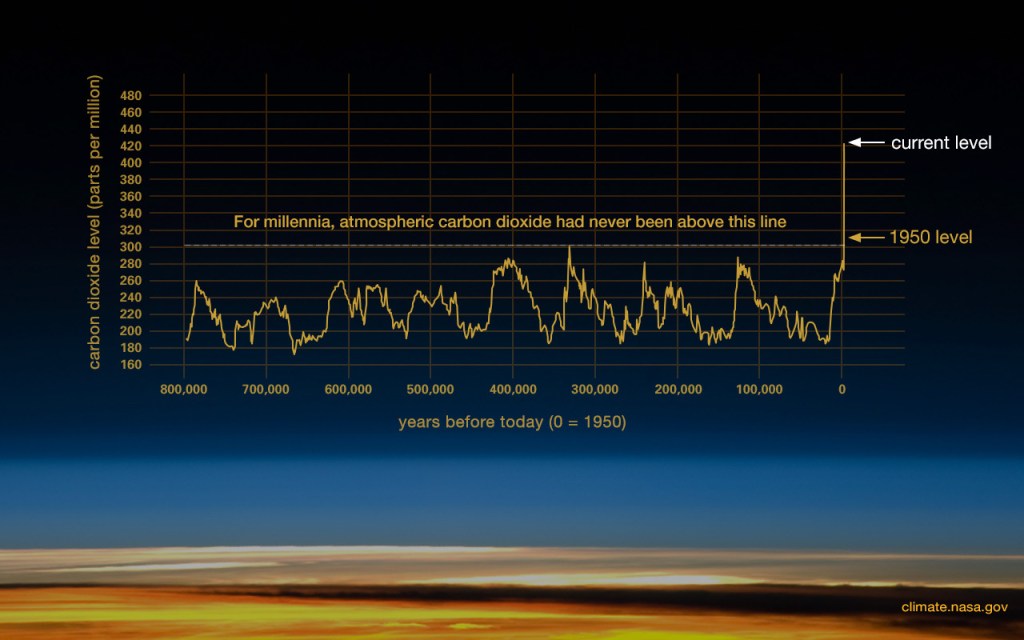
The earth has witnessed climate changes over time, but the current warming is occurring at an unprecedented pace compared to the last 10,000 years. The Intergovernmental Panel on Climate Change (IPCC) asserts that since the 1970s when systematic scientific assessments commenced, the impact of human activity on climate warming has transformed from a theoretical concept into an acknowledged reality. Nevertheless, it is quite interesting to revisit the historical data of 10,000 years provided from another perspective.

Based on a technical point of view, the dynamic behavior of carbon dioxide indicates obeying the property of the cyclical component of a time series analysis. The cycles in the carbon dioxide dynamic behavior time series data are aperiodic such that the series oscillates around the mean, but the timing and duration of the excursions above and below the mean are irregular. The series does not appear to exhibit a trend since there is no tendency for the series to increase or decrease persistently. It also does not show the seasonal component in particular since the changes in the series do not follow predictable ways of timing. In general, the cycle of the dynamic behavior of carbon dioxide tends to repeat in a span of 100,000 years.

Source: NASA (https://climate.nasa.gov/evidence)

Nevertheless, from the author’s view, it would be less likely to argue that recent carbon dioxide levels are spurious or part of a broader pattern at the current time based only on the provided data for some reasons. First, more data points after 1950 might be needed to informally identify whether the levels of carbon dioxide are spurious and to obtain a sufficient sample size to be more convincing concerning a broader pattern of a temporary shift in the dynamics of the variable. Second, a spurious correlation can happen when two variables are correlated but do not have a causal relationship. With that being said, it appears like the values of one variable cause changes in the other variable, but that is not necessarily the case. Third, a serial correlation test might need to be conducted to check whether there is a relationship between a variable and its lags or successive values. By examining autocorrelation and partial autocorrelation, one can identify patterns in the data, understand how previous values impact future values, and make predictions about future outcomes.

Moreover, based on the data and their interpretation, it could be inferred arguments both for and against a relationship between global warming and carbon dioxide levels. The argument for the relationship between global warming and carbon dioxide levels might come from the fact that as the global warming issue has raised recently, carbon dioxide levels at the same time were significantly higher than its highest rate as well as its average level in the past 10,000 years when global warming was not an issue. There might be a correlation between the two variables. Nevertheless, correlation does not imply causality, which leads to the argument against the relationship between global warming and carbon dioxide levels.

It is important to note that it needs a robust regression analysis to argue whether there exists a causal relationship between the two variables. Even after finding some evidence of the relationship based on the regression results, one should interpret carefully as there might be other factors outside the time series regression that could help explain the relationship between global warming and carbon dioxide levels. For example, some activities such as road construction and deforestation can change the reflectivity of the earth’s surface, which might lead to a higher temperature and local warming (Fahey et al., 2017). It does not mean that what one could conclude by only looking at these time series is sufficient to understand the causality and recommend policies.

In conclusion, while the current warming of the Earth’s climate is unprecedented compared to the last 10,000 years, the relationship between global warming and carbon dioxide levels is a complex issue that requires further investigation. The influence of human activity on climate warming has been established as a fact by the IPCC, but understanding the causal relationship between global warming and carbon dioxide levels necessitates robust regression analysis and consideration of other contributing factors. To formulate effective policies and interventions, a comprehensive understanding of the dynamics of climate change and its drivers is crucial which can be explored through further research and analysis on the intricate interactions between global warming, carbon dioxide levels, and other factors influencing climate change.

References
Fahey, D.W., S.J. Doherty, K.A. Hibbard, A. Romanou & P.C. Taylor. (2017). Physical drivers of climate change. In: Climate science special report: Fourth national climate assessment, volume I [Wuebbles, D.J., D.W. Fahey, K.A. Hibbard, D.J. Dokken, B.C. Stewart & T.K. Maycock (eds.)]. U.S. Global Change Research Program: Washington, DC.

NASA


The Messenger (Part 5)

A succinct summary of a certain period in photos and insightful quotes (according to the author’s opinion)

Starting again. Continuing the journey. Moving on, leaving the past behind. In practice, sometimes it is easier to say than to do. It requires at the very least a mix of courage, motivation, maturity, calmness, determination, moment, and enforcement. To always raise up after every single down. To get the self together and come back. To fall back into place.


Most of the time it’s just too difficult, too expensive, too scary. It’s only once you’ve stopped that you realize how hard it is to start again, so you force yourself not to want it. But it’s always there.
– Ted Mosby –


As a deer longs for streams of water; more than watchmen yearn for the morning.
– Psalm –


One day we’ll wake up and brush our teeth and go to work, and at some point, we’ll suddenly realize that we haven’t thought about it at all. And that’s when we’ll know we can forget.
– Saul Goodman –


It seems like once again you’ve had to greet me with goodbye.
505 – Arctic Monkeys


Tender is the night
For a broken heart
Somewhere in these eyes
Fall back into place

Fall back into plac
e
Space Song – Beach House


On The Potential Effect of Türkiye’s Decrease in Interest Rate on Its Macroeconomic Outcomes


As the government of Türkiye has decided to lower the interest rate (Pitel, 2022), one important question that arises would be: what is the impact of the decision on the Türkiye economy? To answer the possible effect on Türkiye’s economy, the IS-LM theory in international macroeconomics can be applied as an explanation as it is a relatively simple model linking the relationship between goods, foreign exchange, and the money market. Hence, the IS-LM model could represent, explain or predict the performance of an economy. Türkiye adopted a floating exchange rate regime under which exchange rates are determined by supply and demand conditions in the market. Based on the IS-LM theory, the decline in Türkiye’s interest rate under a floating exchange rate may lead to a depreciation of the Lira, and an increase in its trade balance, investment, and total output.

In the domestic goods market, a lower interest rate could have a positive effect on the demand and an upward shift on the demand curve through an increase in investment, resulting in more output in the economy assuming ceteris paribus. The decline in interest rate makes investment less expensive, hence, it poses an increasing effect on domestic investment. However, it also means that the domestic market becomes less attractive for investors as the domestic expected return decreases. Assuming foreign return constant, the decline in domestic return would lead to an increase in the exchange rate of the Lira, meaning a depreciation of the Lira against the US dollar in the foreign exchange market. If this is the case, assuming all else equal, it can also be expected that the trade balance of Türkiye might experience an increase as the relative price of Türkiye to the rest of the world’s goods is lower in the global market that could bolster its export value.

Nevertheless, it is important to acknowledge that the IS-LM theory has certain limitations. First, it is applicable only to a short-term examination under certain assumptions, such as sticky prices and constant foreign economic circumstances, which may not always be practical in reality. Second, it fails to account for the potential repercussions of a liquidity trap in the long run. However, one cannot rule out the possibility of a liquidity trap arising, given the Turkish government’s intention to reduce its interest rate in the future. Since this theory has its constraints, it is necessary to supplement the analysis with additional theoretical frameworks to investigate the impact of Türkiye’s decrease in interest rates, especially in the long run. 

First, the Fisher Effect concept can be applied to forecast that the current situation in Türkiye may lead to a further depreciation of the country’s currency, the Lira, over the long term. As prices adjust over time, inflation is likely to occur. The Fisher Effect posits that the nominal interest rate differential is equal to the expected inflation differential. Given that Türkiye’s interest rate is one of the lowest real interest rates worldwide, a reduction in interest rates is expected to result in a higher expected inflation differential with the rest of the world, leading to further depreciation of the Lira relative to the US dollar.

Furthermore, the lower interest rates may encourage Turkish citizens to hold their money in cash since there is no opportunity cost of holding money, making cash more attractive. According to the standard model of real money demand, a decrease in the nominal interest rate leads to an increase in the overall demand for money, which can result in a higher price or inflation when the growth rate of money is higher than that of real income, assuming all else equal. Additionally, if Türkiye maintains a loose monetary policy in the long run, it can be expected that the Lira will continuously depreciate, with the expected rate of depreciation equivalent to the interest differential at that time.

Second, it is worth noting that the liquidity trap could explain the effect of Türkiye’s interest rate decline if the intention to keep lowering the interest rate is implemented. This concept suggests that when a policy drives the interest rate hit the zero lower bound (ZLB), the central bank’s capacity to lower the policy rate further is exhausted. As per the case of Türkiye, the government wanted to keep applying downward pressure to market rates to calm financial markets. This policy may lead to a liquidity trap when Türkiye’s interest rate reaches zero or the ZLB if it continuously lowers its interest rate, which in turn leaves the monetary policy ineffective in intervening in the market. In this case, fiscal policy instead could be effective as it may boost the total output of the economy without crowding out effect.

In conclusion, the IS-LM theory could be utilized to examine the consequences of the Turkish government’s decision to reduce interest rates on Türkiye’s economy, but it is necessary to incorporate other theoretical frameworks to assess the long-term implications and the possibility of a liquidity trap if the interest rates continue to decrease. In the short term, the reduction of interest rates in Türkiye is likely to have an impact on the economy, leading to a depreciation of the Lira, and an increase in the trade balance, investment, and overall output. However, in the long run, as the price level adjusts, inflation and further depreciation could occur, leading to a potential liquidity trap when the interest rate reaches the zero lower bound.

References
Feenstra, R.C., & Taylor, A. M. (2016). International Macroeconomics (4th ed.). Worth Publishers.

Pitel, L. (2022, 8 June). Turkish Lira’s Slide Accelerates as Erdoğan Vows to Continue Slashing Rates. Financial Times. https://www.ft.com/content/4f56465e-d315-4502-b117-6dbd833e02e7

Revisiting the Relevance of International Macroeconomic Policy Coordination

Given the uncertainty in the current global economic situation, one question arises regarding whether international macroeconomic policy coordination is still relevant. The choice of whether to implement international macroeconomic policy coordination depends on the specific circumstances, as explained in previous literature on the topic. First, the success of cooperation and coordination principally requires the sharing of information and analysis. However, there are differing opinions regarding the need for fiscal consolidation and the extent of adjustments required in surplus countries. Consequently, achieving agreement on these issues will require a process of building trust through shared information and analysis, as well as a collaborative approach (Adam et al., 2012).

Second, cooperative responses to international macroeconomic policy coordination are also influenced by the nature of the disturbances, according to Fischer (1987). When there are positive transmission effects, different countries will require different policies to deal with a shift in demand. In the case of a worldwide disturbance, similar policy responses will be needed in different countries if transmission effects are positive. The objectives of each country also affect the specific policy actions that should be taken. For example, the breakdown of the Bretton Woods system indicates that international differences in policy goals may be too significant for systematic macroeconomic policy coordination among major economies. Nevertheless, occasional agreements and coordination on specific policy packages may still be feasible.

Third, the exchange rate regime is a crucial factor that determines policy interactions as part of international macroeconomic policy coordination between countries. Flexible exchange rates, for instance, can provide countries with insulation from external shocks and more freedom to pursue domestic goals without worrying about foreign reactions or policies, as argued by Fischer (1987). Given the flexibility of exchange rates, it is unlikely that macroeconomic policy coordination among major economies will progress beyond the exchange of information and occasional agreements on specific policy tradeoffs. However, both information sharing and occasional policy agreements under the right circumstances are beneficial and should be encouraged. It should be noted that interdependence has still increased within the flexible rate system. In practice, the slow adjustment of domestic prices and wages assuming prices and wages are sticky in the short run, coupled with the quick adjustment of the exchange rate to policy changes, means that changes in monetary and fiscal policies in one country can rapidly affect the real exchange rate. Additionally, expansionary domestic policies could lead to the anticipation of devaluation, massive capital outflows, and eventually devaluation or a change in policies. Hence, expansionary monetary policy in one country could cause inflation and depreciation of its currency, without necessarily affecting other economies.

Fourth, it is worth considering the fiscal and monetary policy aspects in international macroeconomic policy coordination. Frankel (2015) argues that from a fiscal policy perspective, there is an assumption that fiscal stimulus has positive “spillover effects” on trading partners. Each country may be hesitant to undertake fiscal expansion alone due to concerns about worsening its trade balance, but global conditions could improve if major countries agree to work together as locomotives, pulling the global economy out of a recession. However, despite the popularity of the locomotive theory, coordination does not necessarily mean expansion across the board, as Fischer (1987) points out. The optimal cooperative policies depend on the objectives of policymakers, the nature of the transmission mechanism between the economies, the policy tools at their disposal, and the nature of the disturbances that call for policy responses. Another concern is that policies may be transmitted asymmetrically between countries.

When it comes to monetary policy, regular meetings between officials can be beneficial. For instance, consultation can reduce unexpected events, and in times of crisis, cooperation and exchange of views can help bridge gaps in perceptions. However, some calls for international coordination may be less effective, especially when they attempt to blame other countries in order to divert attention away from domestic issues and disagreements. In other words, calls for coordination can sometimes be misused to conceal domestic problems.

It is imperative to note that with greater economic integration across countries, particularly via the capital account, and asymmetries in exchange rate systems, relying on automatic adjustment mechanisms of the non-system is no longer a practical solution (Adam et al., 2012). Therefore, it is necessary to re-establish policy cooperation to rebalance the global economy and mitigate the negative spillover effects that may result from uncoordinated attempts at rebalancing.

In the long run, there may be an opportunity for countries to coordinate their policies for mutual benefit, as their understanding of policy operations and interdependence grows. While coordination is generally considered better, empirical evidence suggests that the benefits may be relatively insignificant due to the limited impact of policies in one country on others (Fischer, 1987). Additionally, differing views on policy outcomes and uncertainties about their effects may make it difficult to reach an agreement. Thus, the appropriate approach after all might be for each country to focus on keeping its economy stable, at least in the short run.

References
Adam, C., Subacchi, P., and Vines, D. (2012). International Macroeconomic Policy Coordination: An Overview. Oxford Review of Economic Policy, vol. 28, no. 3, pp. 395–410.

Fischer, S. (1987). International Macroeconomic Policy Coordination. NBER Working Papers 2244.

Frankel, J. (2015). International macroeconomic policy coordination. VoxEU CEPR.

On Dilemma Not Trilemma: The Global Financial Cycle and Monetary Policy Independence 


Based on the theory (Feenstra and Taylor, 2016), three key conditions faced by open economies: a fixed exchange rate that can enhance stability in trade and investment, free international capital mobility that can promote integration, efficiency, and risk-sharing, and monetary policy autonomy that can provide control over the economy’s business cycle. The trilemma suggests that open economies can only achieve two out of three of these desirable policy goals simultaneously, leading to three scenarios: a fixed exchange rate and international capital mobility with no interest equality, international capital mobility and monetary policy autonomy with no fixed exchange rate (floating exchange rate), or a fixed exchange rate and monetary policy autonomy with no international capital mobility (capital control), resulting in differences between domestic and foreign returns. Essentially, it is impossible to have free capital mobility, fixed exchange rates, and independent monetary policy all at once, and only a floating exchange rate can enable monetary policy independence in the presence of free capital flows. The trilemma also assumes uncovered interest parity (UIP).

However, it is possible that a country may not fit completely into one of the three scenarios presented earlier, as the degree of fixed exchange rates, capital mobility, and monetary policy independence may be partial rather than absolute. Additionally, in practice, the global financial cycle can be influenced by a country’s monetary conditions and changes in risk aversion and uncertainty. Rey (2013) argues that the assumption of uncovered interest parity (UIP) may not always hold true. When capital is mobile, fluctuating exchange rates cannot protect economies from the global financial cycle. Thus, the trilemma becomes a dilemma, where independent monetary policies can only be possible if the capital account is managed, regardless of the exchange rate regime. In other words, capital control is necessary for monetary policy autonomy, making it a dilemma rather than a trilemma.

Rey (2015) has proposed various policy options to tackle the “dilemma” and the global financial cycle. One option is to use targeted capital controls. However, it is challenging to evaluate their effectiveness on financial stability and their side effects because they have only been implemented in specific low-income countries with unique characteristics. Temporary capital controls on credit flows and portfolio debt during a boom phase may be useful in preventing an excessive exchange rate appreciation, such as through the imposition of taxes on capital inflows. Capital controls may also be necessary when there is extensive cross-border lending, and the banking system can be circumvented. It is important to note that macro-prudential policies can also help reduce the link between domestic monetary policy and capital inflows, without the need for capital controls. For instance, by controlling excessive credit growth during boom times, the Central Bank can discourage banks from borrowing externally when domestic monetary policy tightens.

The second approach involves addressing the global spillovers resulting from the monetary policy of the dominant countries. These spillover effects are currently not being internalized, so the central banks of the major economies should consider the collective impact of their policies on the rest of the world. One practical method, as suggested by Eichengreen et al. (2011), would be to create a small group of systemically significant central banks that meet regularly under the auspices of the Committee on the Global Financial System of the Bank for International Settlements (BIS). This group would evaluate and discuss the effects of their policies on global liquidity, leverage, and exposures, as well as the appropriateness of their joint money and credit policies concerning global price, output, and financial stability. However, implementing this policy option presents difficulties, as international cooperation on monetary spillovers may conflict with the domestic mandates of central banks.

The third option to deal with the challenges posed by the dilemma and the global financial cycle is to prevent excessive credit growth. Macro-prudential tools, such as countercyclical capital cushions, loan-to-value ratios, and debt-to-income ratios, can be used to limit excessive credit growth. It is also necessary to monitor lending standards and trading strategies during high credit growth periods. However, the timing of the intervention needs to be determined carefully. Automatic rules based on the credit-to-GDP ratio can be used to determine the timing of intervention, which is more robust to lobbying from interested parties and overcomes the bias towards inaction during good times. Stress testing the balance sheet of the financial sector is another option. However, stress testing is a challenging exercise, and estimating second-round effects is particularly difficult. This option is also unpopular with market participants and requires careful communication policy and fiscal backstop strategies to guarantee the credibility of the stress testing.

The fourth option involves limiting the ability of financial intermediaries to amplify the effects of global financial conditions through stricter regulations on their leverage. This would structurally reduce their capacity to be excessively pro-cyclical. Implementing tougher leverage ratios is a reasonable approach to reduce the significant costs of errors of judgment without burdening costs on the real economy (Haldane, 2012).

Given that excessive leverage and credit growth are the main problems, a combination of macroprudential policies based on rigorous stress testing and stricter leverage ratios is necessary. Depending on the source of financial instability and institutional context, capital controls could be considered a partial alternative to macroprudential measures. In general, the policy choice may also depend on domestic mandates and economic conditions. For instance, Indonesia has implemented automatic rules based on the credit-to-GDP ratio, intervening when the threshold of 60% is exceeded. While each option has its benefits and drawbacks, the choice of policy will depend on country-specific factors.

References
Eichengreen, B. et al. (2011). Rethinking Central Banking, Committee on International Economic Policy and Reform, Brookings Institution.

Feenstra, R.C., and Taylor, A. M. (2016). International Macroeconomics (4th ed.). Worth Publishers

Haldane, A.  (2012). The Dog and the Frisbee, given at the Jackson Hole 36th economic policy symposium.

Rey, H. (2013). Capital flows: assessing the costs, hunting for the gains, presented at the  IMF research conference on Rethinking macroeconomic policy, Washington DC. 

Rey, H. (2015). Dilemma Not Trilemma: The Global Financial Cycle and Monetary Policy Independence. NBER Working Paper 21162


Commentary on Financial Globalization and Productivity Growth


Financial openness has been an important topic of discussion in the economics literature. One of the potential benefits of financial openness is its positive impact on productivity growth. The argument is that financial openness allows for greater access to capital, which can lead to increased investment, technological progress, and ultimately, higher productivity levels. 

In this context, this post attempts to put a perspective on the arguments made by Prasad, Terrones, and Kose (2009) regarding the positive impact of financial openness on productivity growth, while also highlighting some additional considerations that should be taken into account when evaluating this relationship. Furthermore, this post also discusses the implications of the UK’s withdrawal from the European Union (Brexit) and its relation with the COVID-19 pandemic that happened in an adjacent period.

While I partially agree with Prasad, Terrones, and Kose (2009) regarding the positive impact of financial openness on productivity growth, I believe their arguments need further consideration. Specifically, at least four important points were not fully explored in their analysis and should be taken into account when evaluating their arguments.

The first point is that the effects of financial openness on productivity growth may differ across countries. Although theoretically, investments such as foreign direct investment (FDI) should continue until rates of return are equal, low-income and high-income countries have different levels of productivity. Therefore, the magnitude of financial openness’s impact on productivity growth may vary across countries. For instance, empirical evidence shows that productivity, particularly in terms of marginal product of capital, may not be much higher in low-income countries than in high-income countries.

The second point is that the authors did not consider social efficiency in their analysis. Social efficiency, which includes institutions, public policies, and cultural differences, is theoretically one of the main factors affecting financial integration (FDI) inflows. Empirical evidence shows that capital tends to flow to countries with better institutions. Therefore, social efficiency might contribute to explaining how financial openness bolsters productivity and the linkage between the two.

The third point concerns the importance of the risk premium in the analysis of financial openness. The risk premium can be a substantial cause of capital flow, particularly in emerging markets, as it compensates for the risks of investing in these markets. The fact that the analysis finds that financial integration does not seem to matter for productivity growth may also be related to the risk premium that is not captured in the analysis and contributes to the insignificant result of the relationship between the two variables. This means that financial openness alone does not guarantee capital inflows, which may in turn have no significant effect on productivity growth.

The fourth point is that the share of capital in production varies across countries. In many developing countries, the share of capital may be lower, which may affect the degree to which financial openness promotes productivity growth. In addition, the relative price of investment (the price of capital goods) may vary across countries, even if financial openness exists, which makes investment levels differ, and in turn, contributes to the level of productivity growth. Thus, adjustments to the analysis at the country level may be necessary to make the results more comparable, for instance, by categorizing countries based on a certain level of share of capital in production.

The UK and The Global Economy After Brexit

Moving forward to a recent column in the context of financial openness, I agree with Posen (2022) to the extent that several indicators have shown a decreasing trend in the UK since the Brexit vote, including international trade, trade openness, immigrant population, and inward FDI flows. This trend is concerning, as it might indicate that the UK is moving towards a closed economy, which can have multiple harmful effects, such as hindering innovation and hampering productivity growth. 

Empirically, part of the reasons for the declining trend in UK trade and investment in particular could be the deep integration level of the European Union (EU) that provides the benefit to trade and investment from being a member. For example, prior to Brexit, the UK benefited from reduced trade costs and trade liberalization, which can improve allocative and productive efficiency in the short run (Crafts, 2016). This might be because the EU has achieved a deeper level of economic integration and there is no close substitute (Baier et al., 2008). For FDI, there is evidence that EU membership has a strong positive effect on FDI because of market access (Slaughter, 2003). Hence, it is reasonable that the UK’s withdrawal from the EU affected the country’s trade and investment.

On the other hand, there is an indication that the UK is moving towards an autarky or a closed economy. Theoretically, the implication for the economy if the UK continues to become more closed cannot be underestimated, as it may face difficulties in obtaining the gain from consumption smoothing. This means that a trade-off could occur in the economy if the UK wants to make more investments by reducing consumption to compensate for the increase in investment.

However, it should be noted that the evidence presented should be interpreted with caution, and further analysis may be required to make a more accurate conclusion, as correlation does not necessarily mean causality. This means other factors could also influence the decline in selected indicators, such as the 2020 pandemic. In my point of view, the pandemic in 2020 might have exacerbated the effect of Brexit; hence, the impact of Brexit, if there had been no pandemic, might not have been as large as if there had been a pandemic. While the COVID-19 pandemic and Brexit are two separate events that have had significant economic impacts on the UK, their combined effects may exacerbate the negative economic impacts on the country.

There are several potential arguments for this hypothesis. First, the global pandemic of 2020 has had an adverse effect on numerous economies worldwide. Empirical studies indicate that the COVID-19 outbreak has had a severely negative impact on cross-border activities, including trade, investment, and the movement of people (Hayakawa et al., 2022; Moosa and Merza, 2022). It is reasonable to assume that lockdowns, travel restrictions, and other measures implemented by governments to curb the spread of the virus have led to a decrease in trade flows and a slowdown in economic activity.

Second, the pandemic could exacerbate the negative economic effects of Brexit by causing significant disruptions in global supply chains and international trade. For example, a report published in 2021 suggested that Brexit has resulted in changes to migration and trade regimes, which have further aggravated the supply bottlenecks caused by the pandemic (Office for Budget Responsibility, 2021).

Third, the COVID-19 outbreak may magnify the impact of Brexit by exposing different sectors of the economy compared with those exposed to Brexit alone. This implies that in most cases, the regions and sectors most affected by the economic impact of COVID-19 are distinct from those likely to be most affected by Brexit, as reported by the Trade Union Congress (2020). For example, the manufacturing of automotive, transport equipment, chemicals and chemical products, and textiles, as well as services such as finance and communications, are among the sectors most exposed to Brexit. On the other hand, the hospitality, tourism, transport, arts, and entertainment sectors are among those most exposed to the economic impact of COVID-19. The automotive industry is one of the sectors that has experienced a decline due to the pandemic and is likely to be significantly impacted by Brexit. Thus, the combined effect of both crises would have a more extensive impact on the UK than either would have had independently.

In conclusion, while financial openness can have a positive impact on productivity growth, the analysis presented by Prasad, Terrones, and Kose (2009) needs to be considered with caution. There are several factors to take into account, including differences in productivity levels between countries, the importance of social efficiency, the risk premium, and the share of capital in production. Similarly, the decline in UK trade and investment since Brexit may be partially attributed to the deep integration of the European Union, but further analysis is required to determine causality. The COVID-19 pandemic may have also exacerbated the negative economic effects of Brexit by causing significant disruptions in global supply chains and international trade. Therefore, it is important to conduct further research to understand the complex interplay between these factors and their impact on the economy.

References
Baier, S. L., Bergstrand, J., Egger, P., & McLaughlin, P. (2008). Do Economic Integration Agreements Actually Work?  Issues in Understanding the Causes and Consequences of the Growth of Regionalism. The World Economy, 31, 461-497.

Crafts, N. (2016). The Growth Effects of EU Membership for the UK: Review of the evidence. Global Perspectives Series: Paper 7, 1-26.

Hayakawa, K., Lee, H., & Park, C. (2022). The Effect of Covid-19 on Foreign Direct Investment. ADB Economics Working Paper Series No. 653

Moosa, I. A., & Merza, E. (2022). The effect of COVID-19 on foreign direct investment inflows: stylised facts and some explanations. Future Business Journal, 8(1), 20.

Posen, A. (2022, April 27). The UK and the global economy after Brexit. Peterson Institute for International Economics. https://www.piie.com/research/piie-charts/uk-and-global-economy-after-brexit

Prasad, E., Terrones, M. and Kose, M. (2009, January 5). Financial globalisation and productivity growth. VoxEU. http://voxeu.org/article/financial-globalisation-and-productivity-growthLinks to an external site.

Slaughter, M. (2003). Host Country Determinants of US Foreign Direct Investment into Europe in H. Hermann and R. Lipsey (eds.), Foreign Direct Investment in the Real and Financial Sector of Industrial Countries. Berlin: Springer, 7-32.



A Comment on Navigating the Debt Legacy of The Pandemic


In their article, Kose, Ohnsorge, and Sugawara (2021) proposed several measures that countries could take to address debt-related risks before the next crisis or pandemic. However, it is important to note that the suggestions might need more details. Hence, this post serves as a comment that would contribute to more detailed measures.

The first suggested measure is for emerging markets and developing economies (EMDEs) to have better spending and revenue policies in an improved institutional environment. This includes increasing spending on education, health improvement, and climate-smart investments, broadening government revenue bases by removing exemptions, strengthening tax administrations, and supporting private sector growth.

However, these policies may not apply universally to all EMDEs as they may depend on the economy’s structure, particularly in terms of government spending and economic complexity. For instance, countries like Honduras, Kazakhstan, and Nicaragua already allocated more than 20 percent of their government expenditure to education in 2021. Rather than increasing education spending, it might be more beneficial to improve the quality of education and health spending for these countries, such as by enhancing monitoring mechanisms and access equality.

From the revenue side, according to The United Nations Conference on Trade and Development (UNCTAD), 87 developing countries in the world heavily rely on commodity exports, making their revenue highly susceptible to global market price volatility. Therefore, promoting private sector growth to boost productivity gains might be ineffective in commodity-dependent countries that lack economic diversification. These EMDEs, which are typically commodity-dependent, may need to take additional measures to diversify their economy to lessen reliance on specific sectors that might be vulnerable to global financial shocks.

The second recommended way is to promote an open and rules-based environment for trade and investment, which has been a major driver of economic growth for many countries in the past. Nevertheless, to be effective, this approach needs to be more specific in terms of its focus on the business environment. For instance, in countries like Indonesia, which have a proportion of almost 99% of Small and Medium Enterprises (SMEs) of the business units in the country according to the Coordinating Ministry of Economic Affairs. Such businesses should be supported and taken into account when designing policies to promote trade and investment. This is because SMEs are a vital source of employment and economic growth in such countries.

The third suggested measure is to provide additional support, including debt relief, to some EMDEs and low-income countries to return their debt to manageable levels. Nonetheless, this policy requires careful consideration of the extent of debt relief and the need to ensure that it is effectively targeted. In addition to those actions, an important step that can be taken is to ensure debt transparency, which involves assessing all types of debt and creditors to gain a better understanding of the debt that poses a risk to a nation’s public finances.

In conclusion, Kose, Ohnsorge, and Sugawara (2021) proposed a number of measures that could help address debt-related risks before the next crisis or pandemic. However, it is important to note that these suggestions may need more detailed consideration, as policies may not apply universally to all countries and may depend on their specific economic structures. It is therefore essential to take a nuanced approach to these measures, taking into account the unique circumstances of each country. In addition, it is crucial to ensure debt transparency and carefully consider the extent of debt relief needed to effectively target support to countries in need.

References
Kose, M., Ohnsorge, F., and Sugawara, N. (2021). Navigating the debt legacy of the pandemic. Retrieved 19 February 2023 from https://www.brookings.edu/blog/future-development/2021/10/20/navigating-the-debt-legacy-of-the-pandemic/

United Nations Conference on Trade and Development. (2021). State of Commodity Dependence. United Nations Publications: Geneva.

Ode about A Search


Dear Someone in my past,

Why are you still here?
I thought I had let you go.
It seems that apparently, I do not want to just yet.

Could you tell me the reasons?
I thought I saw you in my dream.
It seems that apparently, you have always been there.

Do we have an accord?
I thought we had settled it in.
It seems that apparently, I have stuck on the puzzle.

How long would you be here?
I thought I have held you on.
It seems that apparently, I should not hold you back.

I have not spent a day without thinking about you.


Thank You, 2022


This post serves as a summary and key takeaways from the author’s point of view based on reflections and contemplations over the year 2022. There are at least three lessons learned from what the author has been personally through this year.

The first lesson is that being in a whole new place and getting exposed to many new people and cultures might tempt an individual and reveal an individual’s true character. Moving into an entirely new environment may force someone to be more aware and cautious of his/her surroundings and well-being. It might motivate them to conduct necessary things in order to survive. Moreover, getting exposed to new people and society with different cultures and backgrounds may lead an individual to be more ‘judgemental’ in terms of selecting his/her peer group and having more sense of others’ influence on him/her. These things could be considered as a natural tendency of someone as part of surviving in a new environment.

Second, for workers, getting a sabbatical leave might bring more benefits. A sabbatical leave may provide time for deep consideration of a particular topic and/or re-examine a worker’s career options (Bass et al., 2020). Additionally, according to Davidson et al. (2010), individuals who reported higher self-efficacy for taking a break, felt more in control, were able to emotionally distance themselves, had a more positive overall experience, and traveled abroad during their sabbatical had higher levels of well-being compared to others. Furthermore, for students, having a short respite might prevent them from being fixated and getting stuck in a certain situation, for example, when working on a problem set. Meanwhile, for people in general, taking a short break from a routine might bring advantages in terms of well-being and a clear mind.

Third, individuals may not know the limit to which their potential could take them, and thus it is noteworthy to give shots on essential things, and of their interests for whatever one sows, that will he also reap. Given some resources and opportunities, it is worth it to utilize those and see what would be the outcome. In other words, speculating on certain things to some degree might bring information about the edge of the course individuals could do with their potential.

To conclude, it is imperative to take some time to have a break, contemplate and rethink things that had happened and options to take ahead. Going out of routine and comfort zone may supply individuals with relatively new perspectives toward their affairs and bring gains that may further lead to better well-being, while giving shots to opportunities with some resources may optimize individuals’ potential. Thank you for the lessons, 2022.


References
Bass, E. J., Caldwell, B. S., Cao, C. G. L., Lee, J. D., & Miller, C. (2020). Planning the sabbatical: Potential benefits, options, and strategies. Proceedings of the Human Factors and Ergonomics Society Annual Meeting, 64(1), 582–586.

Davidson, O. B., Eden, D., Westman, M., Cohen-Charash, Y., Hammer, L. B., Kluger, A. N., Spector, P. E. (2010). Sabbatical leave: Who gains and how much? Journal of Applied Psychology, 95(5), 953–964.

This Too Shall Pass

Georgetown Waterfront Park, Washington D.C.

Getting too much or too little of anything indicates a non-optimal state. It means that being in such a condition is not being at equilibrium since it is not in the appropriate portion and place. For instance, excessively feeling happy, such as euphoric could lead an individual to be off guard and ignore something that should have been anticipated. Vice versa, extremely feeling sad, such as mournful could unambiguously have destructive impacts on the individual. Therefore, being aware of the impermanent nature of states and things in the world could make individuals behave wisely and contribute to optimizing their actions to improve their life by making wise decisions.

The proverb this too shall pass came into being when a king requested a ring that would make him happy when he was sad and vice versa, caution him when he was joyful, and received one engraved with the line (Keyes, 2007). From the psychological perspective, this proverb introduces the question of whether temporal distancing from positive events lowers positive impact through the same mechanism that distancing from negative events lowers negative impact by underlining their impermanence. At first, it looks reasonable that focusing on the impermanence of joyful experiences could diminish their enjoyment.

Bruehlman-Senecal and Ozlem Ayduk (2015) suggest, nevertheless, that it is also possible that the awareness that positive experiences are fleeting might encourage individuals to more fully appreciate and cherish these experiences while they last. Thus, the proverb this too shall pass provides more than cold comfort to individuals who strive with personal struggles. This is supported by the study of Bruehlman-Senecal and Ozlem Ayduk (2015) that suggested so and highlighted temporal distancing as a pivotal strategy for increasing individuals’ awareness that their reactions to stressful events tend to be temporary.

This too shall pass could also be associated with optimizing decisions from the perspective of economics. As representative agents in the economy strive to maximize their interests, such as profit for businesses and utilities for consumers, they are simultaneously subject to certain constraints, including budget and time constraints. Adopting a popular topic of optimality in economics would be beneficial and doable for individuals to optimize their life even though the application in real life might be more abstract and conceptual.

Optimizing individuals’ life might be specified by narrowing down to the micro aspects of their daily life, which are the course of behaviors and decisions since the accumulation of the actions and decisions that they make during the lifetime period might affect their satisfaction (utilities). This means that to optimize their actions and decisions, individuals need to find and determine their objectives. After discovering their life objectives which are unique for each person, individuals need to specify their constraints in any terms, such as financial, time, skills, etc. Knowing the objectives and being aware of the constraints might then make individuals wise in making decisions and taking further steps, which in turn would eventually allow them to effectively pursue their objectives and efficiently take necessary actions and utilize resources during their lifetime period.

It is imperative to note that as rational beings, individuals might want to maximize their lives to the fullest in any aspect. This requires them to act optimally and decide wisely during their lifetime period given some resources and constraints. To enable individuals to take actions and decisions optimally, they need at least two important things. First is knowing the temporary nature of their conditions or experiences or in other words, recognizing their time constraints. The second is to set objectives that are generally unique for each individual. This too shall pass could be applied in real life as cautious for individuals to live their lives optimally.

References
Bruehlman-Senecal, E., & Ayduk, O. (2015). This too shall pass: Temporal distance and the regulation of emotional distress. Journal of Personality and Social Psychology, 108(2), 356–375.

Keyes, R. (2007). The quote verifier: Who said what, where, and when. New York, NY: Macmillan.

Design a site like this with WordPress.com
Get started