This post serves as a summary and key takeaways from the author’s point of view based on reflections and contemplations over the year 2022. There are at least three lessons learned from what the author has been personally through this year.
The first lesson is that being in a whole new place and getting exposed to many new people and cultures might tempt an individual and reveal an individual’s true character. Moving into an entirely new environment may force someone to be more aware and cautious of his/her surroundings and well-being. It might motivate them to conduct necessary things in order to survive. Moreover, getting exposed to new people and society with different cultures and backgrounds may lead an individual to be more ‘judgemental’ in terms of selecting his/her peer group and having more sense of others’ influence on him/her. These things could be considered as a natural tendency of someone as part of surviving in a new environment.
Second, for workers, getting a sabbatical leave might bring more benefits. A sabbatical leave may provide time for deep consideration of a particular topic and/or re-examine a worker’s career options (Bass et al., 2020). Additionally, according to Davidson et al. (2010), individuals who reported higher self-efficacy for taking a break, felt more in control, were able to emotionally distance themselves, had a more positive overall experience, and traveled abroad during their sabbatical had higher levels of well-being compared to others. Furthermore, for students, having a short respite might prevent them from being fixated and getting stuck in a certain situation, for example, when working on a problem set. Meanwhile, for people in general, taking a short break from a routine might bring advantages in terms of well-being and a clear mind.
Third, individuals may not know the limit to which their potential could take them, and thus it is noteworthy to give shots on essential things, and of their interests for whatever one sows, that will he also reap. Given some resources and opportunities, it is worth it to utilize those and see what would be the outcome. In other words, speculating on certain things to some degree might bring information about the edge of the course individuals could do with their potential.
To conclude, it is imperative to take some time to have a break, contemplate and rethink things that had happened and options to take ahead. Going out of routine and comfort zone may supply individuals with relatively new perspectives toward their affairs and bring gains that may further lead to better well-being, while giving shots to opportunities with some resources may optimize individuals’ potential. Thank you for the lessons, 2022.
References Bass, E. J., Caldwell, B. S., Cao, C. G. L., Lee, J. D., & Miller, C. (2020). Planning the sabbatical: Potential benefits, options, and strategies. Proceedings of the Human Factors and Ergonomics Society Annual Meeting, 64(1), 582–586.
Davidson, O. B., Eden, D., Westman, M., Cohen-Charash, Y., Hammer, L. B., Kluger, A. N., Spector, P. E. (2010). Sabbatical leave: Who gains and how much? Journal of Applied Psychology, 95(5), 953–964.
Getting too much or too little of anything indicates a non-optimal state. It means that being in such a condition is not being at equilibrium since it is not in the appropriate portion and place. For instance, excessively feeling happy, such as euphoric could lead an individual to be off guard and ignore something that should have been anticipated. Vice versa, extremely feeling sad, such as mournful could unambiguously have destructive impacts on the individual. Therefore, being aware of the impermanent nature of states and things in the world could make individuals behave wisely and contribute to optimizing their actions to improve their life by making wise decisions.
The proverb this too shall pass came into being when a king requested a ring that would make him happy when he was sad and viceversa, caution him when he was joyful, and received one engraved with the line (Keyes, 2007). From the psychological perspective, this proverb introduces the question of whether temporal distancing from positive events lowers positive impact through the same mechanism that distancing from negative events lowers negative impact by underlining their impermanence. At first, it looks reasonable that focusing on the impermanence of joyful experiences could diminish their enjoyment.
Bruehlman-Senecal and Ozlem Ayduk (2015) suggest, nevertheless, that it is also possible that the awareness that positive experiences are fleeting might encourage individuals to more fully appreciate and cherish these experiences while they last. Thus, the proverb this too shall pass provides more than cold comfort to individuals who strive with personal struggles. This is supported by the study of Bruehlman-Senecal and Ozlem Ayduk (2015) that suggested so and highlighted temporal distancing as a pivotal strategy for increasing individuals’ awareness that their reactions to stressful events tend to be temporary.
This too shall pass could also be associated with optimizing decisions from the perspective of economics. As representative agents in the economy strive to maximize their interests, such as profit for businesses and utilities for consumers, they are simultaneously subject to certain constraints, including budget and time constraints. Adopting a popular topic of optimality in economics would be beneficial and doable for individuals to optimize their life even though the application in real life might be more abstract and conceptual.
Optimizing individuals’ life might be specified by narrowing down to the micro aspects of their daily life, which are the course of behaviors and decisions since the accumulation of the actions and decisions that they make during the lifetime period might affect their satisfaction (utilities). This means that to optimize their actions and decisions, individuals need to find and determine their objectives. After discovering their life objectives which are unique for each person, individuals need to specify their constraints in any terms, such as financial, time, skills, etc. Knowing the objectives and being aware of the constraints might then make individuals wise in making decisions and taking further steps, which in turn would eventually allow them to effectively pursue their objectives and efficiently take necessary actions and utilize resources during their lifetime period.
It is imperative to note that as rational beings, individuals might want to maximize their lives to the fullest in any aspect. This requires them to act optimally and decide wisely during their lifetime period given some resources and constraints. To enable individuals to take actions and decisions optimally, they need at least two important things. First is knowing the temporary nature of their conditions or experiences or in other words, recognizing their time constraints. The second is to set objectives that are generally unique for each individual. This too shall pass could be applied in real life as cautious for individuals to live their lives optimally.
References Bruehlman-Senecal, E., & Ayduk, O. (2015). This too shall pass: Temporal distance and the regulation of emotional distress. Journal of Personality and Social Psychology, 108(2), 356–375.
Keyes, R. (2007). The quote verifier: Who said what, where, and when. New York, NY: Macmillan.
A succinct summary of a week in photos and insightful quotes (according to the author’s opinion)
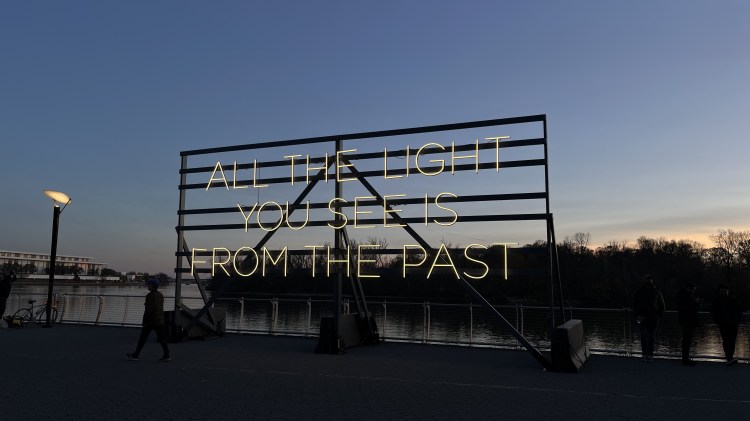
For a unitary time endowment of an individual, it might be beneficial to allocate some time to observe what has been happening and draw life lessons. After several contemplations, one thing remains, during the time of joyful and melancholic, those moments shall pass anyway. A good reminder to prevent individuals from getting euphoria and misery: this, too, shall pass.
“The function of man is to live, not to exist. I shall not waste my days trying to prolong them. I shall use my time.” – Jack London
Wisdom allows man to act in a proper and suitable way. That is, to live in a balance of multiple aspects – not too much, yet, not too little.
A shift, a change, and a transition might be struggling. Adjusting, adapting, and starting a new habit might be hard. Moving into a whole new environment might not be easy. Taking a leap to the unknown and uncertainty might not be comforting. But those are not only necessary but also sufficient conditions in order to live instead of merely exist.
I might not know what would happen. I might not know if something conceals a meaning. Nevertheless, I know that I am on the right track. Why? Because I believe so.
“You are such a fool To worry like you do … If the night runs over And if, the day won’t last And if your way should falter Along these stony paths It’s just a moment This time will pass“
We must be balanced in terms of being idealistic (doing things for our passion) and realistic (doing things for our welfare).
Maximize the opportunity when it is given to us by doing every necessary thing fervently.
Things I learned from my Supervisor
Give all of our effort to what we would do – should we find hesitation before doing something, it might be better not to embark on it at all.
Things I learned from my First Echelon
For some things in our life, it might be better to take some time before making a decision. It is not that we do nothing, but instead, it allows us to obtain wise consideration, as well as be aware and adaptive to the progress of a situation.
Transparency is not the same as nudity. Indeed, we need to be credible, transparent and have integrity in every situation. Nevertheless, in some cases and due to some reasons, we might be transparent and credible while at the same time not providing information overly.
In order to accomplish our goals, sometimes we need to face the prerequisite that might be challenging and makes us feel as if we want to skip it, yet it is inevitable.
Thus, it should be faced and we have to embrace the process as if we go through a tunnel to reach the other side of the road which holds our goals.
Revelations, clues, and solutions we search for with our efforts might instead come from exogenous factors – factors that are unexpectedly out of our control. It may be a matter of timing until the ‘eureka’ moment greets us.
Don’t give in and lose our faith and hope easily since we don’t know how close we are to the answer. Yearn for it like a watchman does for the morning.
A strong will triggers us to a start
A strong reason endures us to a finish.
Be aware and careful of who we surround ourselves with.
External social environment and network effect are just as important as internal motivation in enabling individuals to live with better well-being.
We need not know our calling in life instantly. And it does not need to be as massive as changing the world.
We need to find that thing we fight for, that disequilibrium we couldn’t live with, that forces that move us, or that emotion that overwhelms us and pursue it.
Have we changed? Has the fire been extinguished and the warmth vanished? Or is it just time that reveals the truth. The truth of the nature of our relationship. The truth of who we really are, and what we want.
Do this relationship that you really want? Is it just a phase of challenge that you need to endure and pass-through? Or, do those signs are actually giving clues that you need to respond with some turns in the path.
As time goes by, pieces of information are gathered along the way. Can you not still conclude the answer? How much evidence that you need to complete the puzzle and have your words?
If you are still processing everything, the best advice is to take your time.
The more you know, the more you know you don’t know. The more you know, the more the tendency to say ‘it depends’ and ‘probably’.
A funny thing is that the same person could both get confused and comprehend a thing at separate times.
The same individual who denied could also accept an occurrence at a distinguished period. It is another example of the significant role of time, and timing.
Does ‘nothing to lose’ hold for real with no cost?
Every decision and action poses its consequence and cost. Even the hidden one is taken into account, such as time, relationship, etc.
Some things are probably better left unspoken.
Just like some things are maybe better left unknown. Similarly, some notions are possibly better left untaken.
Certain people are stronglydesired to control almost everythingwithout realizing that self-control should have been imposed in the first place.
There are checkpoints in individuals’ lives – the so-called milestones.
Make the most of our efforts and resources at each checkpoint.
Maintain focus on the step-by-step process.
The older people grow, the fewer existing choices/options (particularly to switch their careers), and the more specific actions plan and objectives.
On the other hand, it also means the broader and more strategic the tasks that individuals handle.
“Luck is when preparation meets opportunity”, said one philosopher
In a similar way, equilibrium occurs when what we supply meets the demand.
This is to say that, we need to prepare the supply i.e. skill set, knowledge, capacity, etc. so that when the demand comes, it meets its supply.
As we reveal ourselves, we would be able to define ourselves, our worthiness, and the value that would help determine the appropriate position for ourselves.
Our tasks include discovering the right measurement to identify the classification or category to which we belong. That is, to define feasibility and places where we are supposed to be.
Know yourself and your potentials and develop them.
We need to be assertive and don’t be afraid to set a high target and objective.
Sometimes, we might need to be courageous to take a leap of faith when necessary, particularly for steps that are worth the fight – choices that take us closer to our goals.
We cannot walk alone. And as we walk, we must make the pledge that we shall always march ahead. We cannot turn back. – Marthin Luther King, Jr. (1963)
There are days when individuals look back to the past, recall certain events, and experience nostalgia. Aside from explicit reminders of the past e.g. visiting momentous places or listening to songs associated with past events, nostalgia could be stimulated when individuals face struggling time, feel down or distressed in certain situations. Although some people view reminiscing the past as futile, reminiscing certain past moments might provide benefits through nostalgia.
Firstly, note that reminiscences of past events could result in a nostalgic moment, implying a close link between the two terms. Routledge (2021) explains nostalgia as a self-regulatory existential resource that is regularly utilized to manage stress and uncertainty and to bring together the motivation needed to forge ahead with focus and clear purposes. In specific, individuals are absorbed in nostalgic moments typically when they are feeling low to increase their mood and self-confidence. While nostalgia includes reflection on past experiences, on the other hand, it encourages mental states, behaviors, and purposes that could develop aspects of people’s future well-being. This is to say that when individuals reminisce events that make them nostalgic, they are rethinking personal meaningful, and valuable life events shared with significant others.
As a self-regulatory existential resource, nostalgia poses self-regulatory implications. Certain negative mental states such as sadness, loneliness, meaninglessness, and uncertainty might stimulate nostalgia. On the other side, nostalgia could improve positive outcomes worthwhile for individuals, connectedness to social life, and shape the perspective of meaning in life (Routledge et al., 2013). The effect of nostalgia on shaping the perspective of meaning in life is notably salient considering its substantial impacts on personal motivation to achieve certain goals. It is supported by a finding of Sedikides, et al. (2017) that suggests nostalgia motivates the pursuit of significant life goals by enhancing that sense of meaning.
Moreover, it is suggested that nostalgia helps individuals draw a clear line between their past experiences and present lives to obtain a greater sense of meaning. The connecting process of past events and current lives could elevate individuals’ moods and lower stress. Furthermore, Cheung et al. (2013) suggest that nostalgia could encourage optimism regarding the future through improved self-esteem, connectedness to others, and enhanced hope for the future. In addition to making individuals feel inspired, nostalgia also drives them to take novel actions based on their inspiration (Stephan et al., 2015). The channel through which individuals connect past experiences with current lives could appear in several ways. For instance, individuals may refer to their past experiences to remind themselves about the spirit when they were young (Abeyta and Routledge, 2016), the feeling of affection (Cheung et al., 2013), and life purposes, which in turn encourages future-oriented behavior e.g. networking with others (Abeyta et al., 2015), and achieving life goals (Sedikides et al., 2017).
Considering the aforementioned positive effects of nostalgia and reminiscing the past leads to another important question about how do people harness past experiences for the present and future. First, it should be noted that not all past experiences were meaningful, and therefore, individuals need to sort and filter which events brought valuable insights and lessons. Aside from gathering relevant and significant resources, sorting and filtering could prevent people from information overload. Second, if needed, take note of the lessons from meaningful experiences, and make them as an alarm, information, or motivation for future steps. Third, be attentive to certain experiences that may be connected and might produce discretion and prudence. Finally, apply strategic and necessary actions with information, motivation, and discretion. While there might be other methods to harness meaningful past events, at least, those steps could be a practical and simple way to apply.
In conclusion, when individuals are absorbed in nostalgic moments, it does not automatically mean that they are dwelling in the past and being reluctant to move forward. Reminiscing could be a moment of retrospection and contemplation to remind oneself of his life purpose, meaning, and motivation. It could open access to meaningful memories from the past to help an individual to face the future with a clear vision. Briefly, harnessing the past might be done by reflecting and learning from meaningful experiences to formulate and take impactful, necessary actions in the present and future.
References Abeyta A., Routledge C. (2016). Fountain of youth: the impact of nostalgia on youthfulness and implications for health. Self Identity15, 356–369
Abeyta A., Routledge C., Juhl J. (2015). Looking back to move forward: nostalgia as a psychological resource for promoting relationship goals and overcoming relationship challenges. J. Personal. Soc. Psychol. 109, 1029–1044.
Cheung W., Wildschut T., Sedikides C., Hepper E., Arndt J., Vingerhoets A. (2013). Back to the future: nostalgia increases optimism. Personal. Soc. Psychol. Bull.39, 1484–1496.
Routledge C., Wildschut T., Sedikides C., Juhl J. (2013). Nostalgia as a resource for psychological health and well-being. Soc. Personal. Psychol. Compass7, 808–818.
Sedikides C., Cheung W.-Y., Wildschut T., Hepper E. G., Baldursson E., Pedersen B. (2017). Nostalgia motivates the pursuit of important goals by increasing meaning in life. Eur. J. Soc. Psychol.48, 209–216.
Stephan E., Sedikides C., Wildschut T., Cheung W.-Y., Routledge C., Arndt J. (2015). Nostalgia-evoked inspiration. Personal. Soc. Psychol. Bull.41, 1395–1410.




































 hope.
hope. 